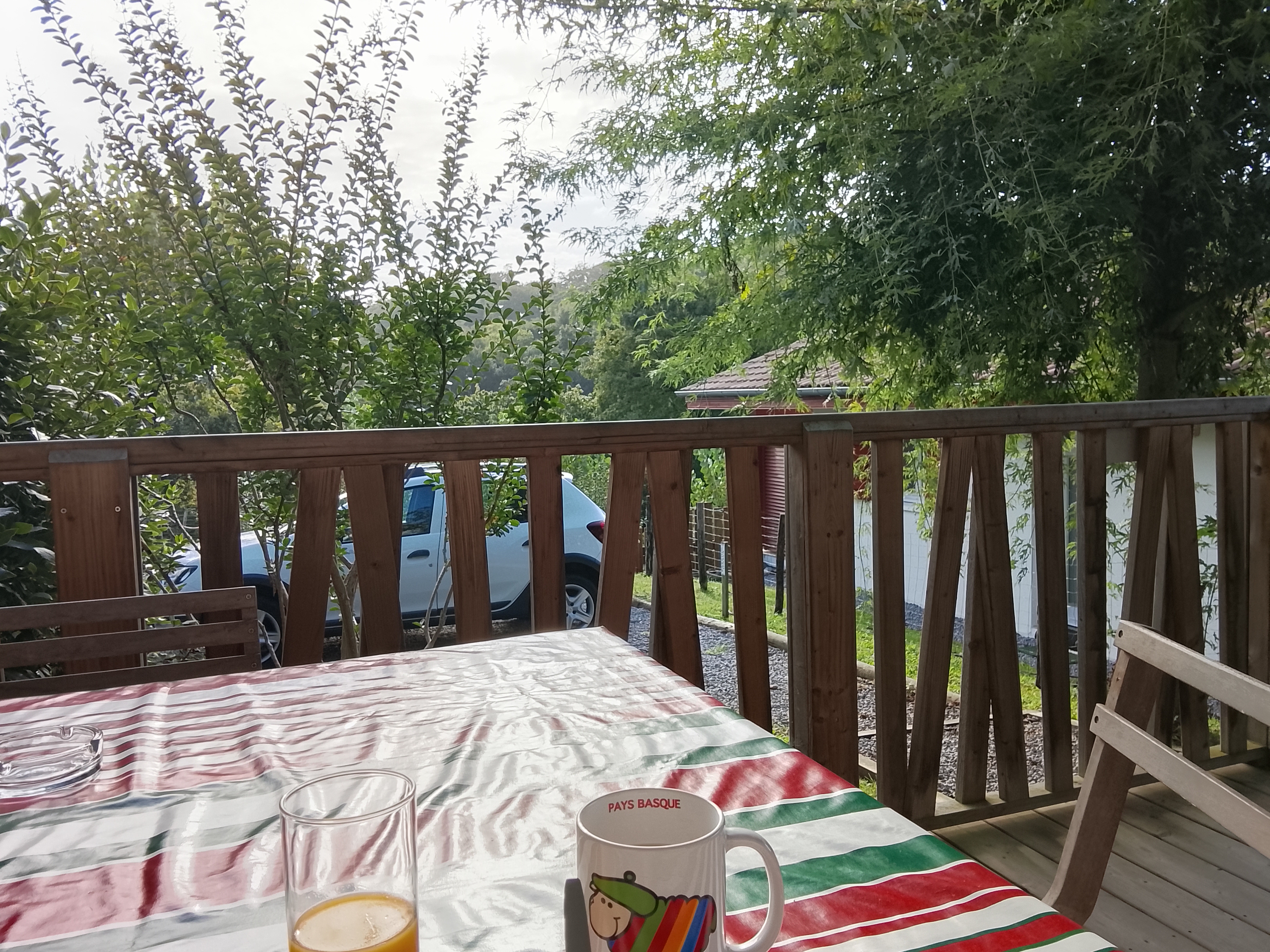
Thursday is market day in Sare and like many people we can’t resist a marche. The sun was shining again so first I took my breakfast outside…
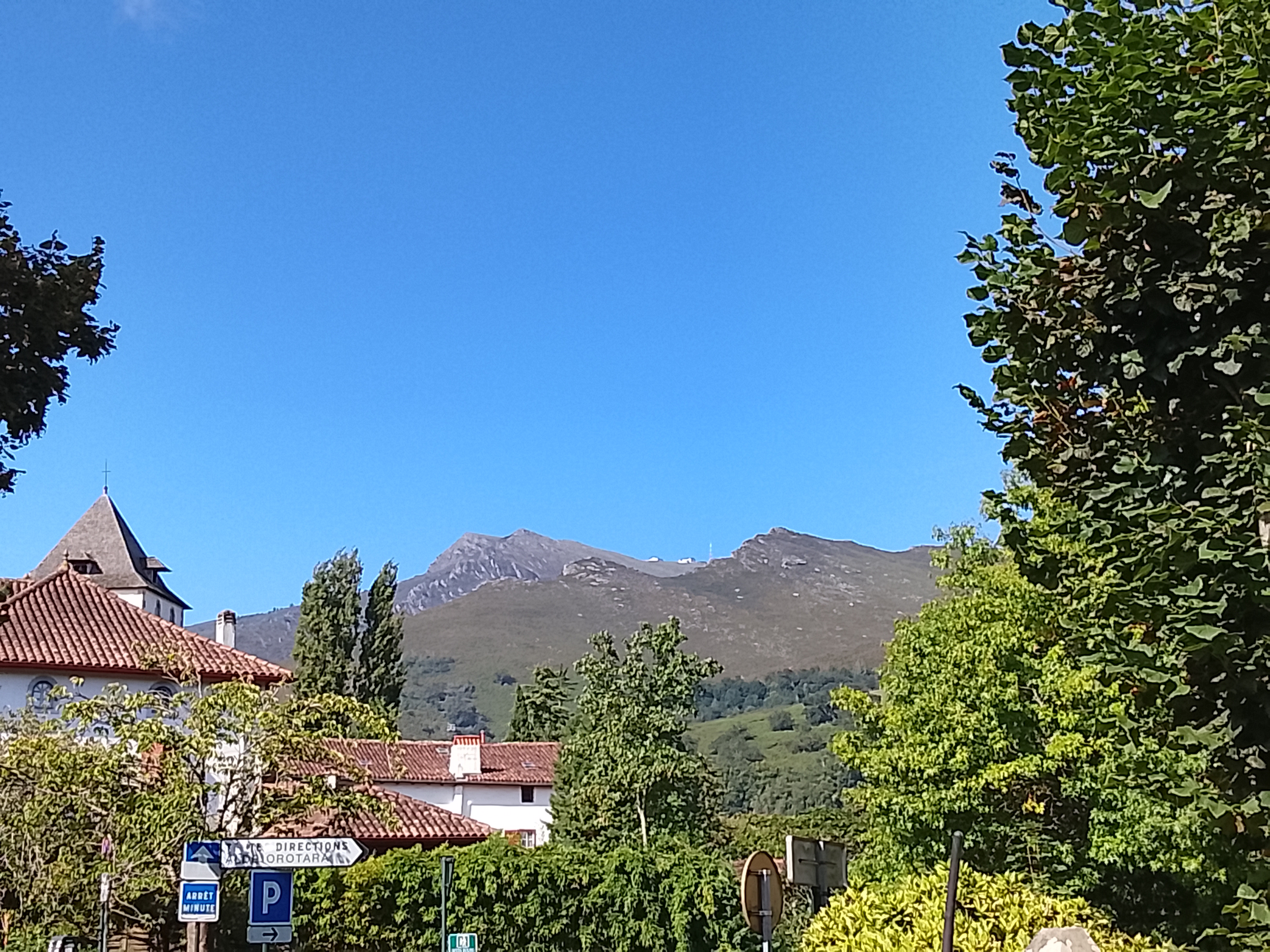
Arriving at the car park mid morning by the supermarket we discovered it was now completely given over to fairground rides which necessitated us backtracking and taking the main road around the village hoping to find somewhere to leave the car. More by luck than judgement we arrived at a small car park with a nearby sign pointing to centre ville. It was uphill, of course, but it was a lovely morning and suddenly we realised that from this side of town we could see the crest of la Rhune and the various masts decorating the top!
The street we were on came out by the side of the church and the tabac that seemed to be permanently shut…but was open today! So a postcard for the grandson. In the main square, that is also a pelote court at the far end, there were several stalls with local produce and handicrafts.
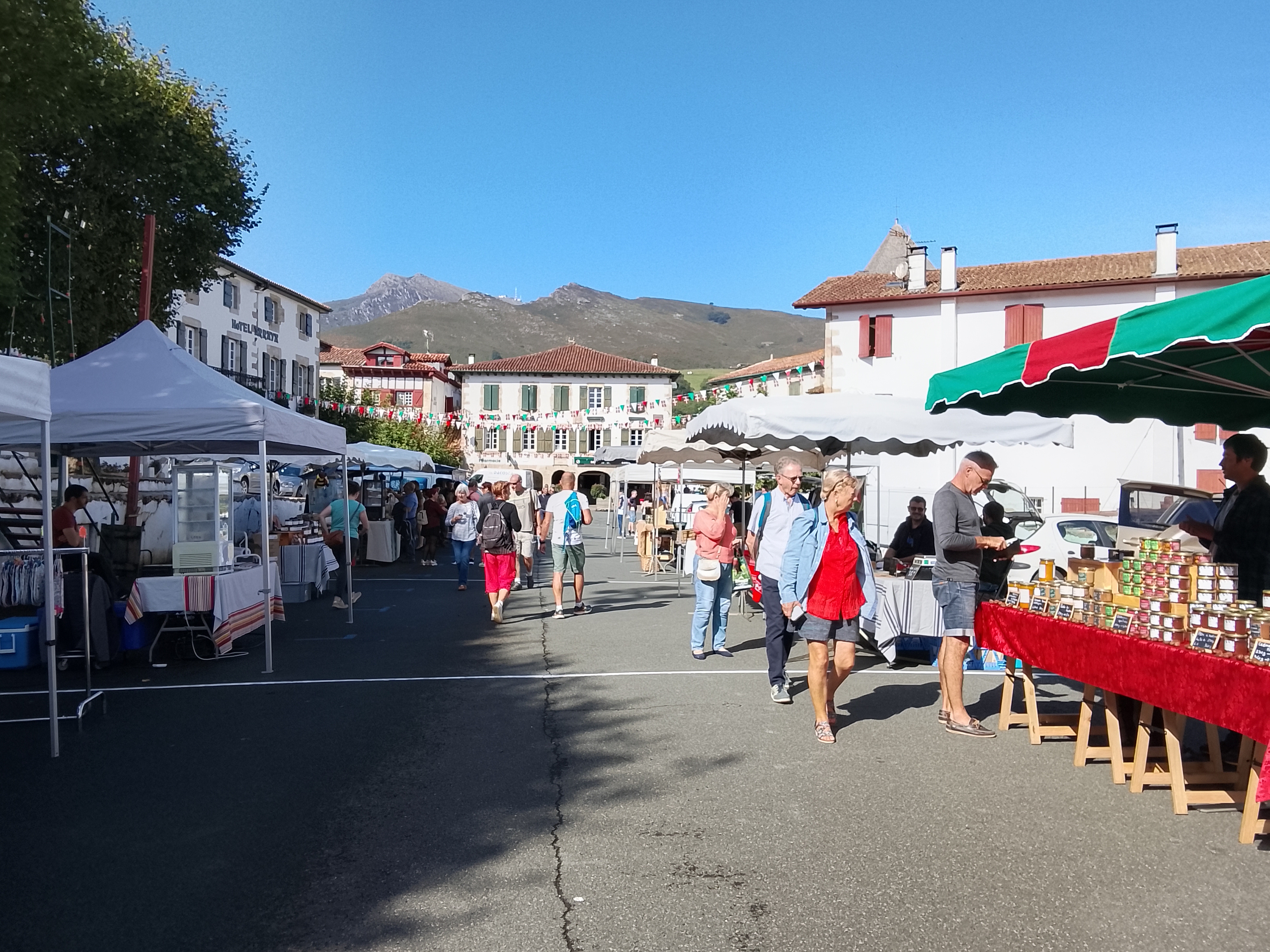
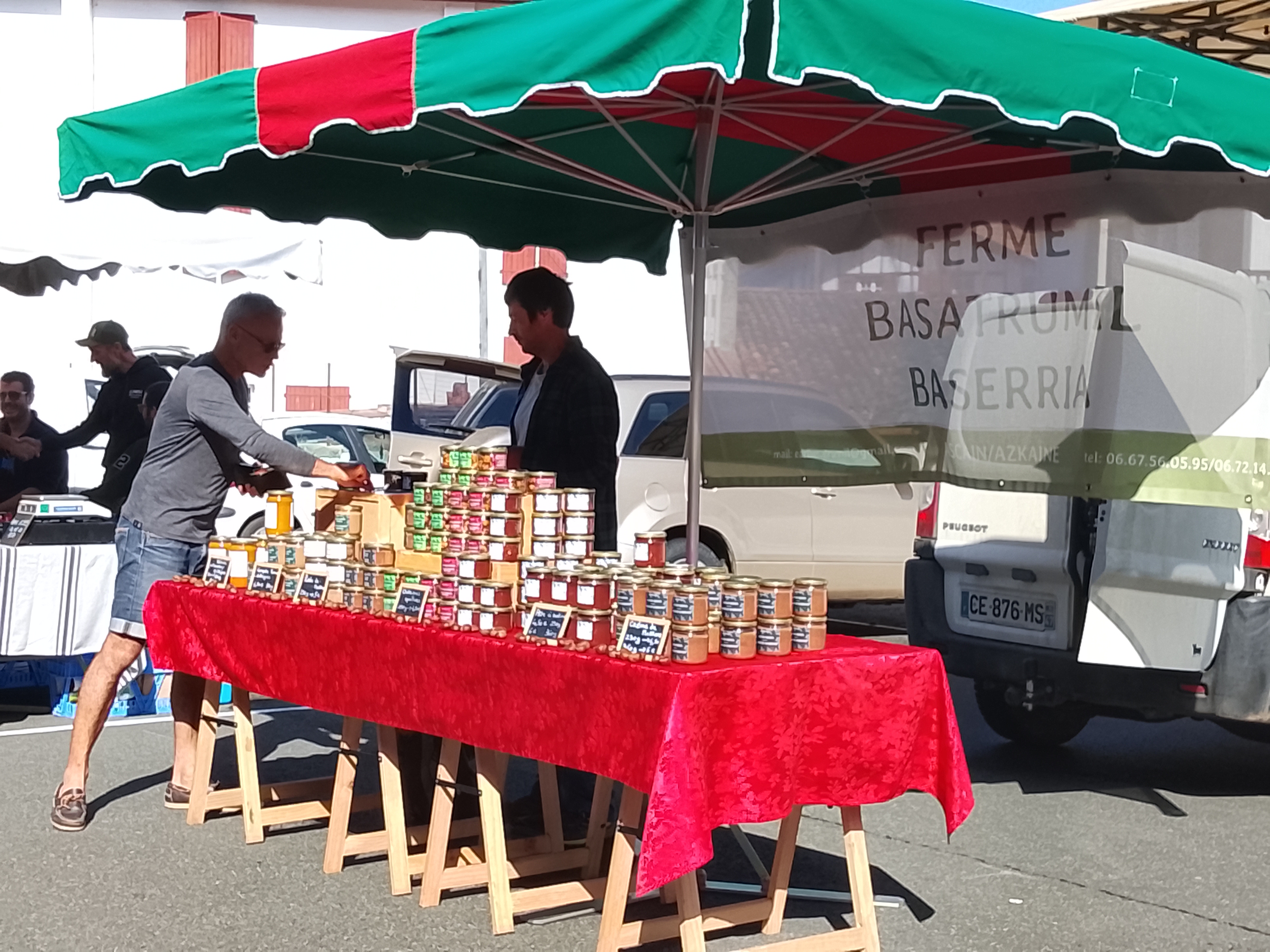
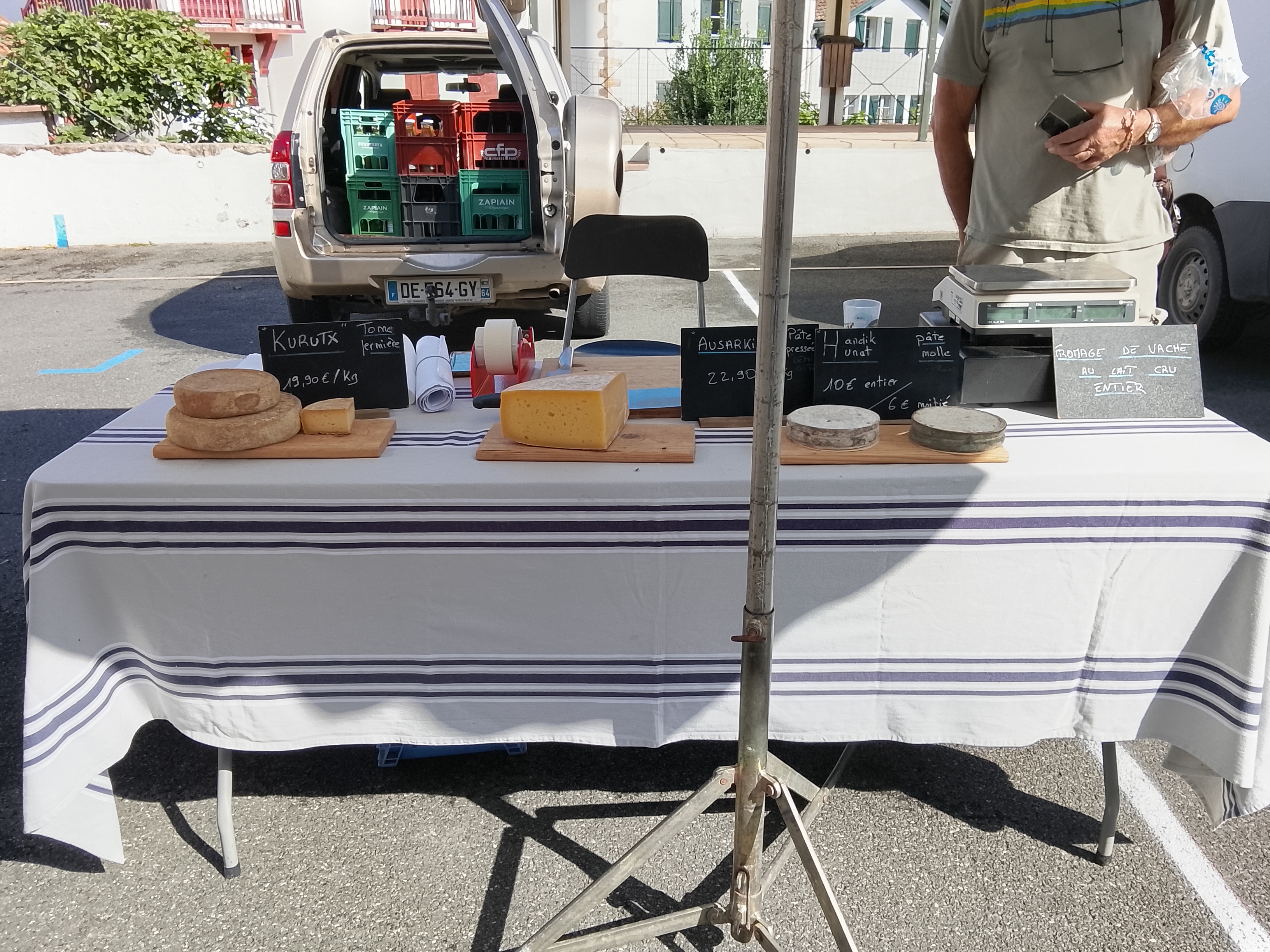
Having stocked up on local cheese, piment and pates in Espelette I settled for some local honey, choosing a forest one for which I was assured the bees had feasted on chestnuts and brambles. It certainly had a stronger flavour than the other honeys.
It was time to repair to a cafe for coffees but, dommage, none were open. They are preparing for the fete I was told by the gateau basque lady (I was becoming addicted to her cherry version). They must be expecting a vast number of customers we decided after discovering that every cafe in town was shut! Such a shame as we like nothing better on a sunny market day than idling over a coffee, watching the world go by, as do many other people, I imagine.
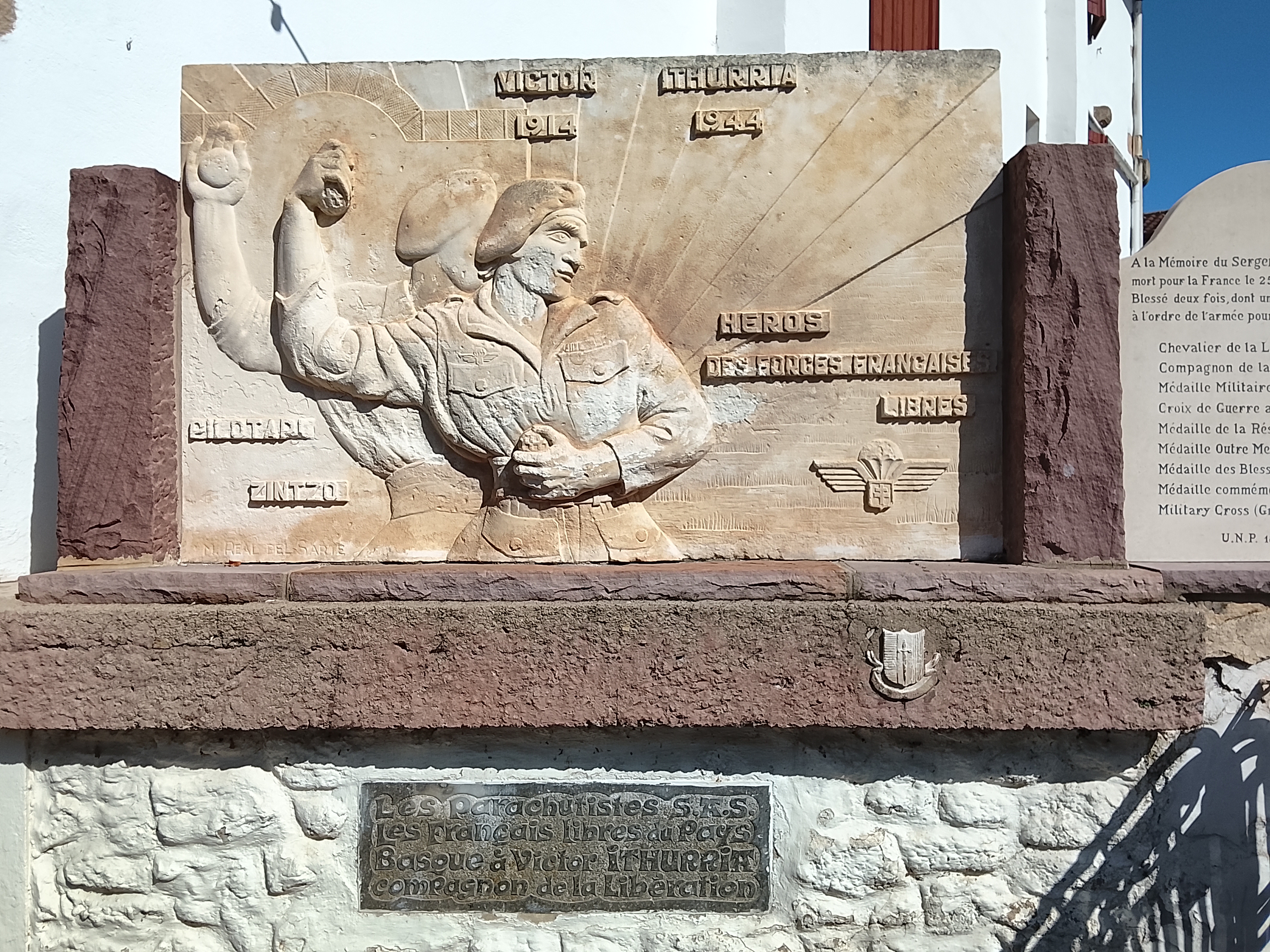
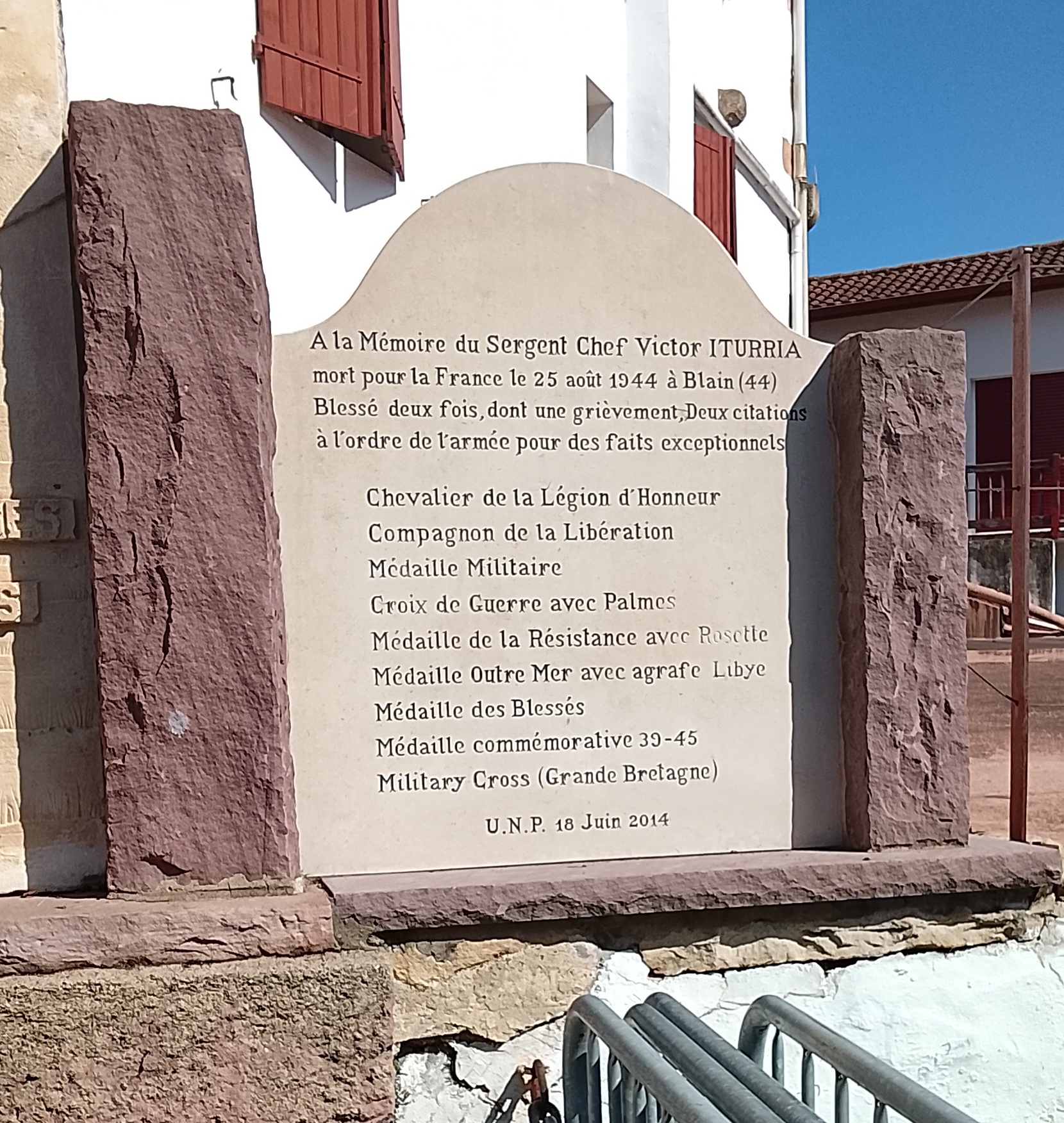
Before we left I went over to take a closer look at a rather splendid war memorial. In reality, it was two memorials, side by side. One to the Free French paratroopers and one to Victor Iturria, a local hero of World War Two who was evacuated as an injured anti tank gunner from Dunkirk to Britain. After recovering he subsequently joined the Free French and acting alongside the British SAS fought in North Africa with distinction. In 1944 he was parachuted back into France to fight with the resistance in Brittany to help with the liberation. Tragically he was killed in an ambush in the southern Loire in August of that year.
The weather was changing as we ate lunch so we decided on an indoor visit for the afternoon. There are caves near Sare but being claustrophobic they did not appeal to me. But there was a Basque museum, Ortillopitz, in the locality which we were interested to see as it was housed in an old basque labourdin farmhouse, typical of the region.

There was only one other car in the car park when we arrived so we might have the place to ourselves. We bought our entry tickets from a rather brusque chap in a small building hidden in the trees. In fact the whole place seemed to be tucked into a hollow surrounded by woods.
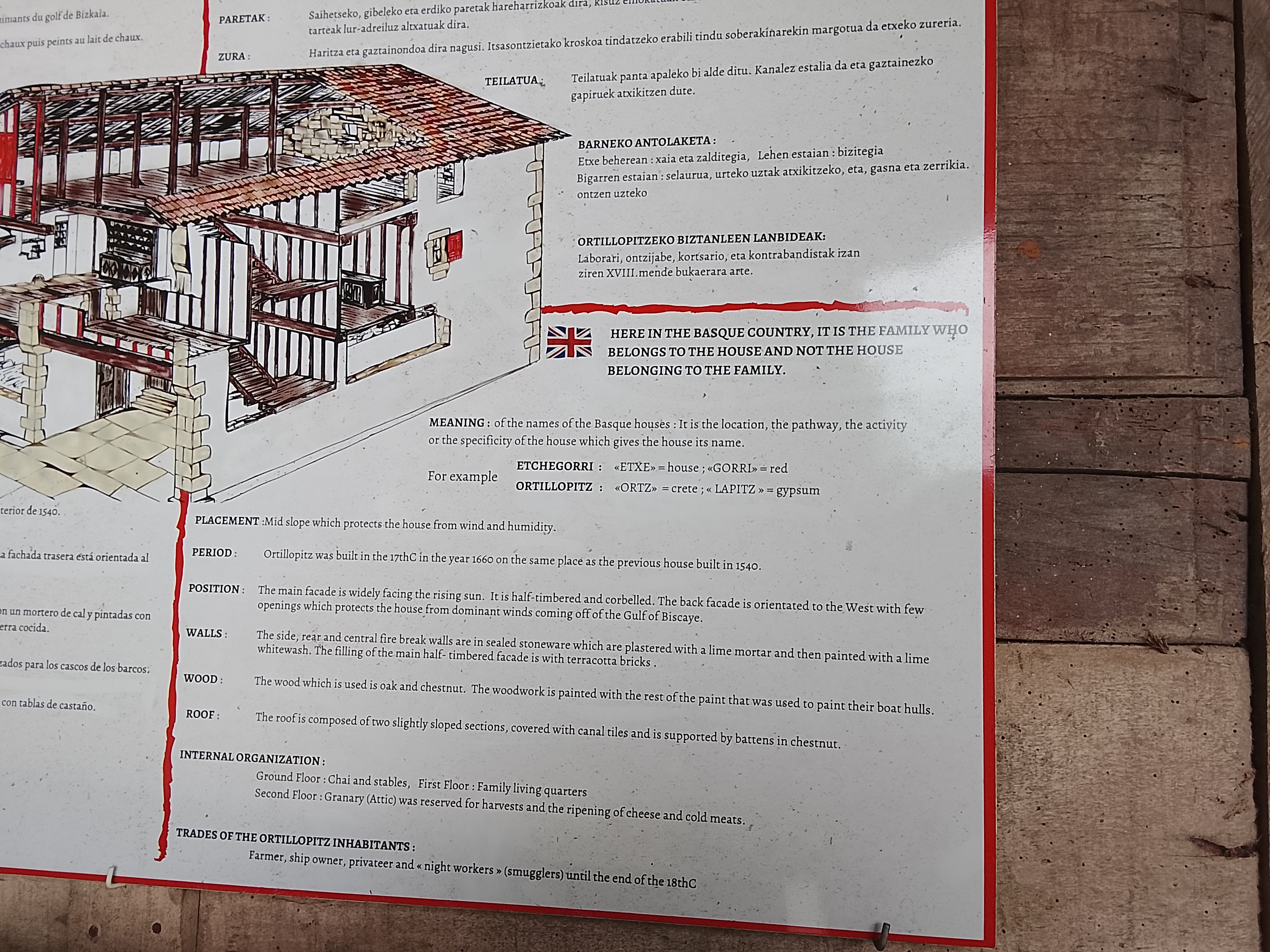
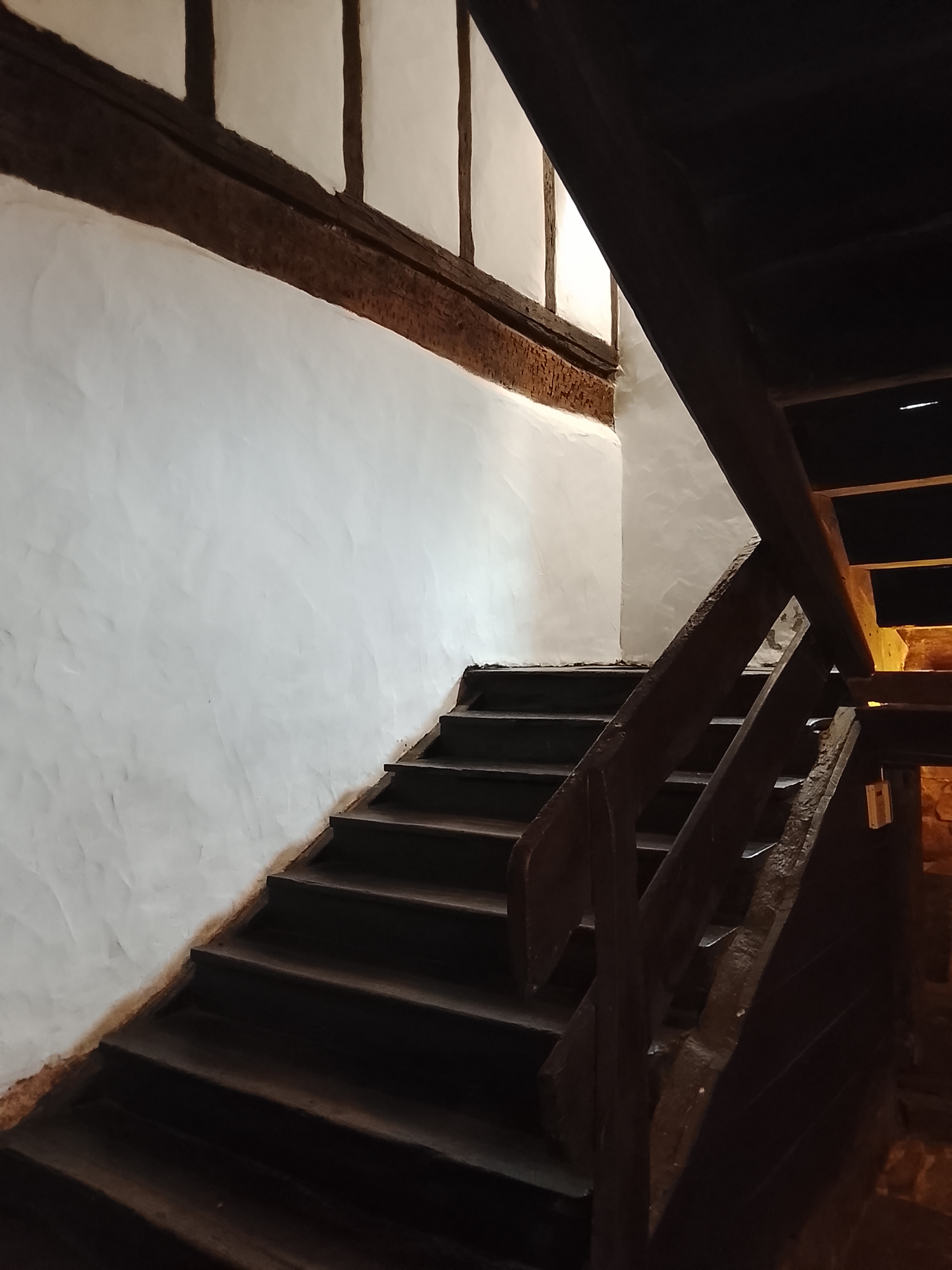
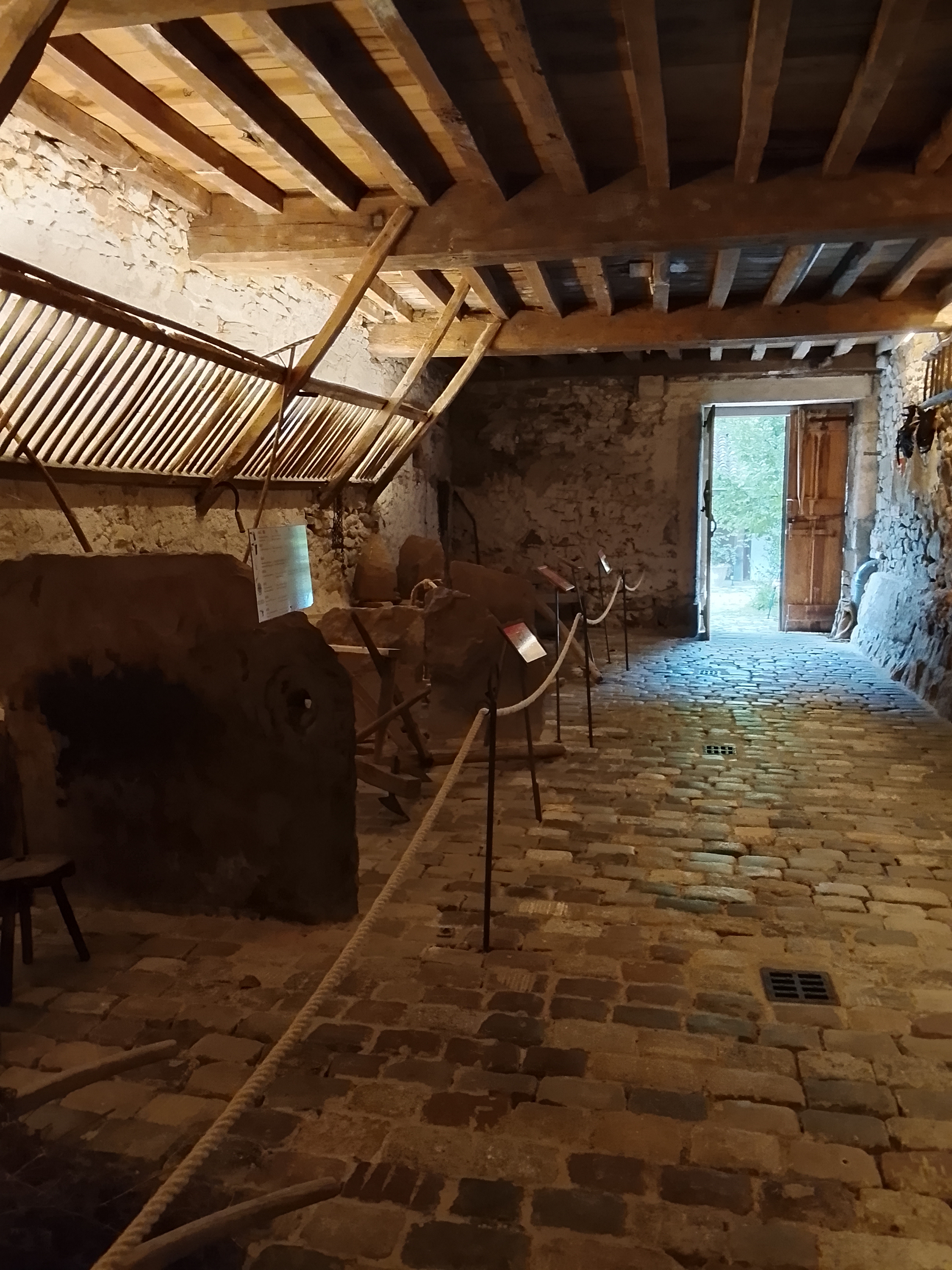
Initially Mr McGregor was anxious that the staircase was without a handrail but clinging to one another in Derby and Joan mode we made it up and down safely. There were excellent explanatory signs everywhere in four languages including English. The cave and stables took up the ground floor so the kitchen and living quarters were on the first floor as they would have been in our house when it was first built in the middle ages. This house dated from a similar time.
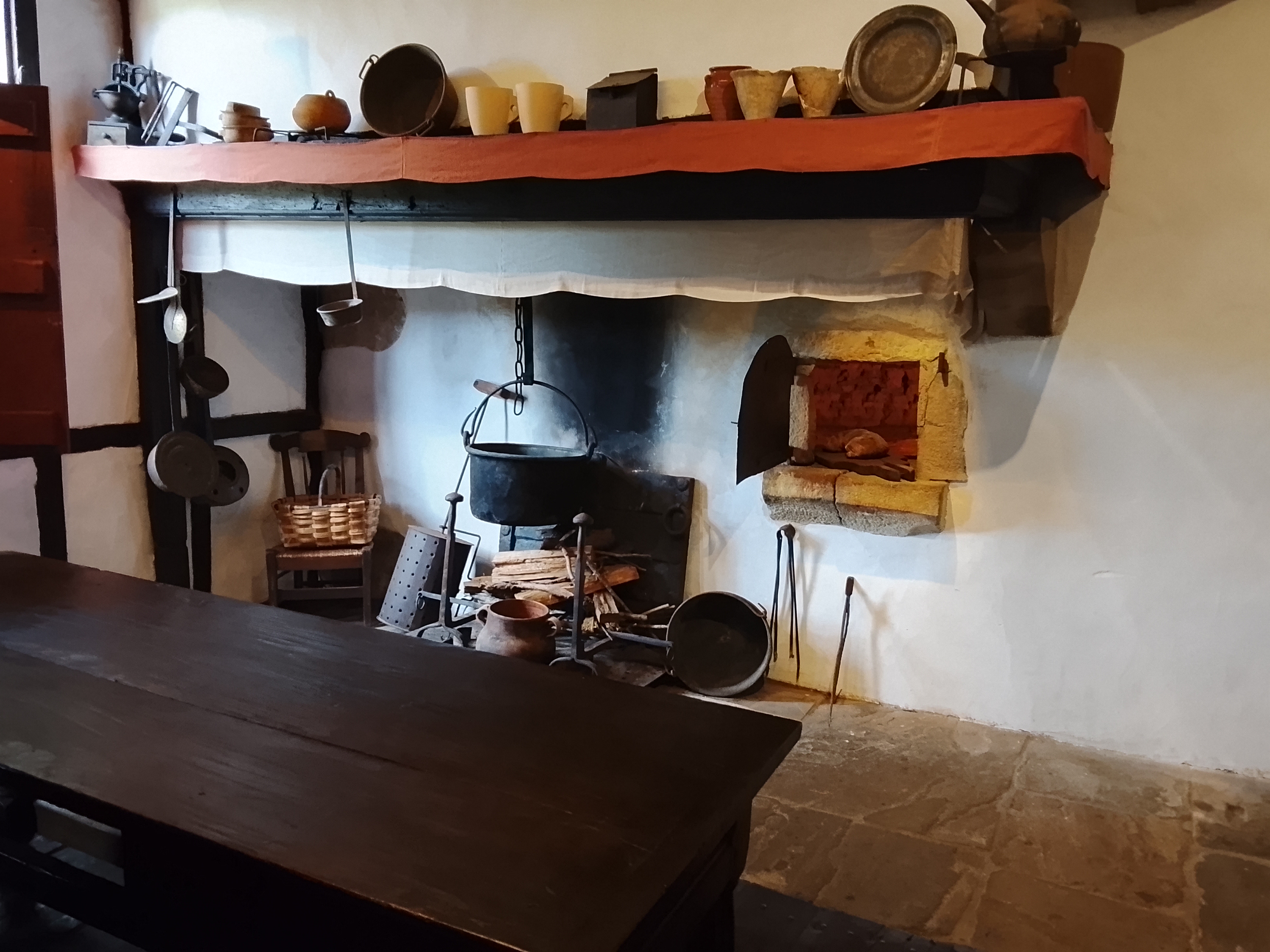
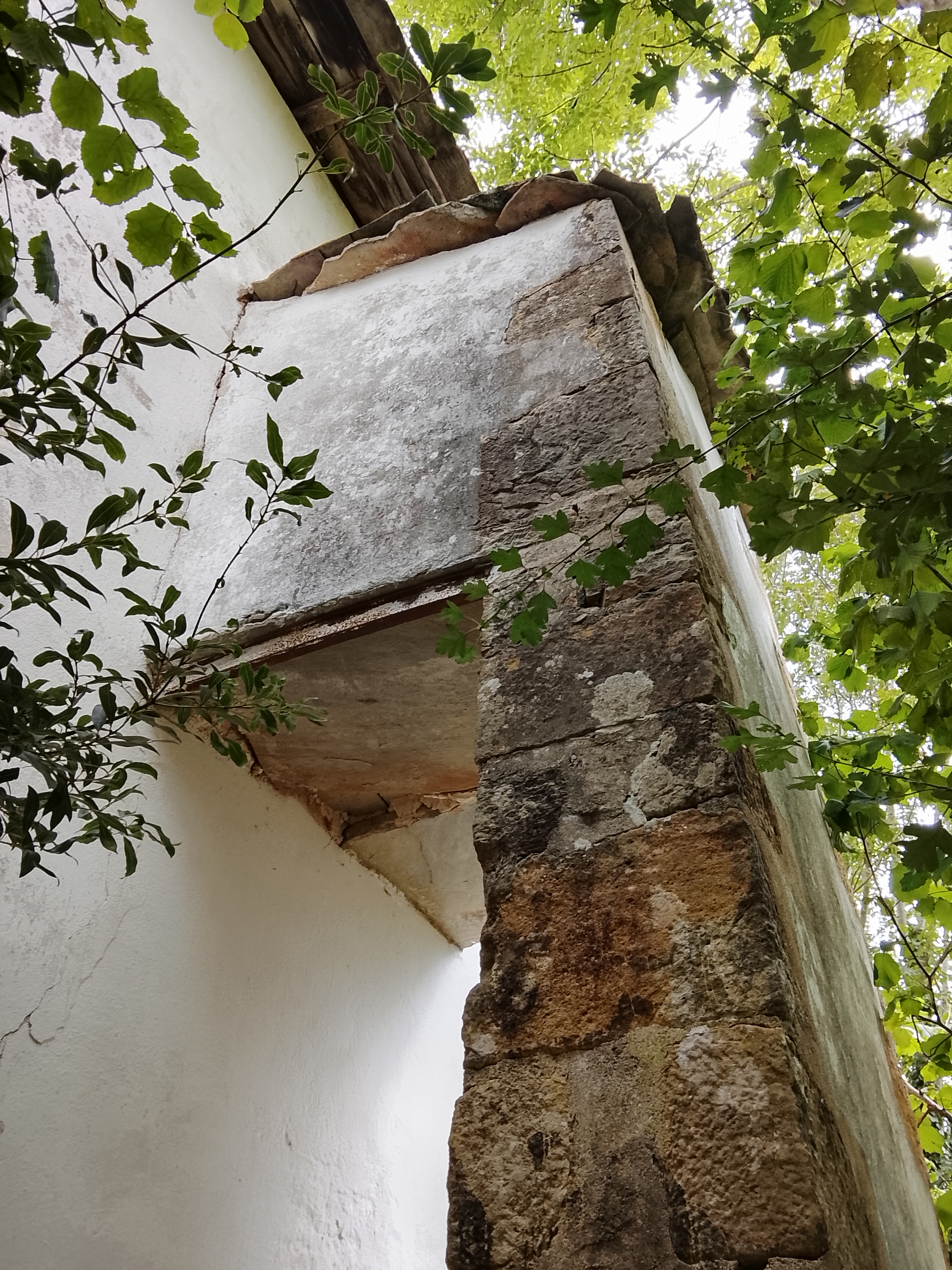
I was fascinated by the bread oven in the kitchen, in our area they are always an additional building on the ground floor but this was built out of the first floor wall!
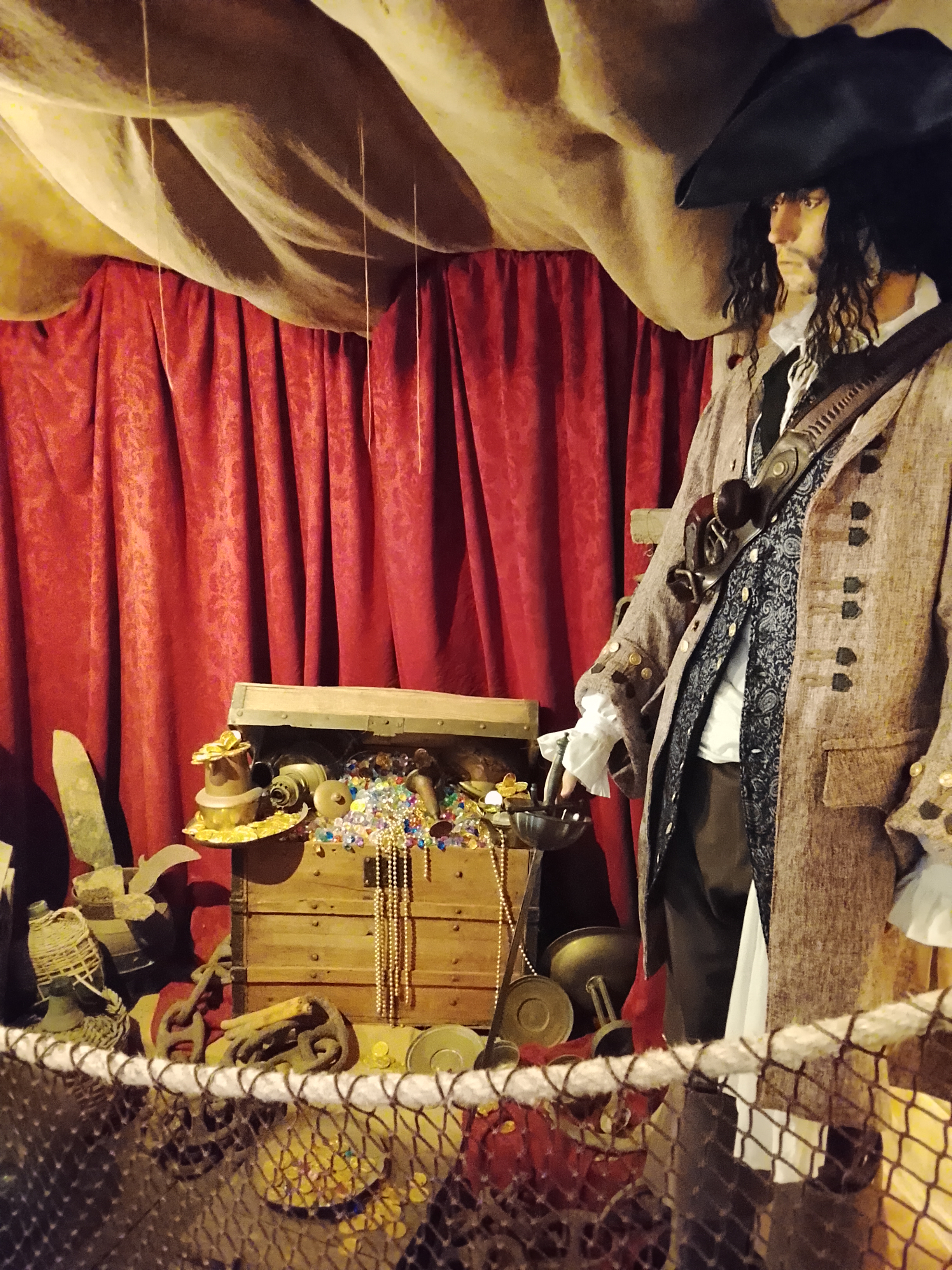
In one corner of the attic there was a pirate and his treasure, a nod to the smuggling or ‘nightwork’, an important part of the local economy at one time. I was surprised that going to sea was an local occupation but in hard times the proximity of the coastal ports must have been useful, not to mention the closeness of the Spanish border for overland night work!
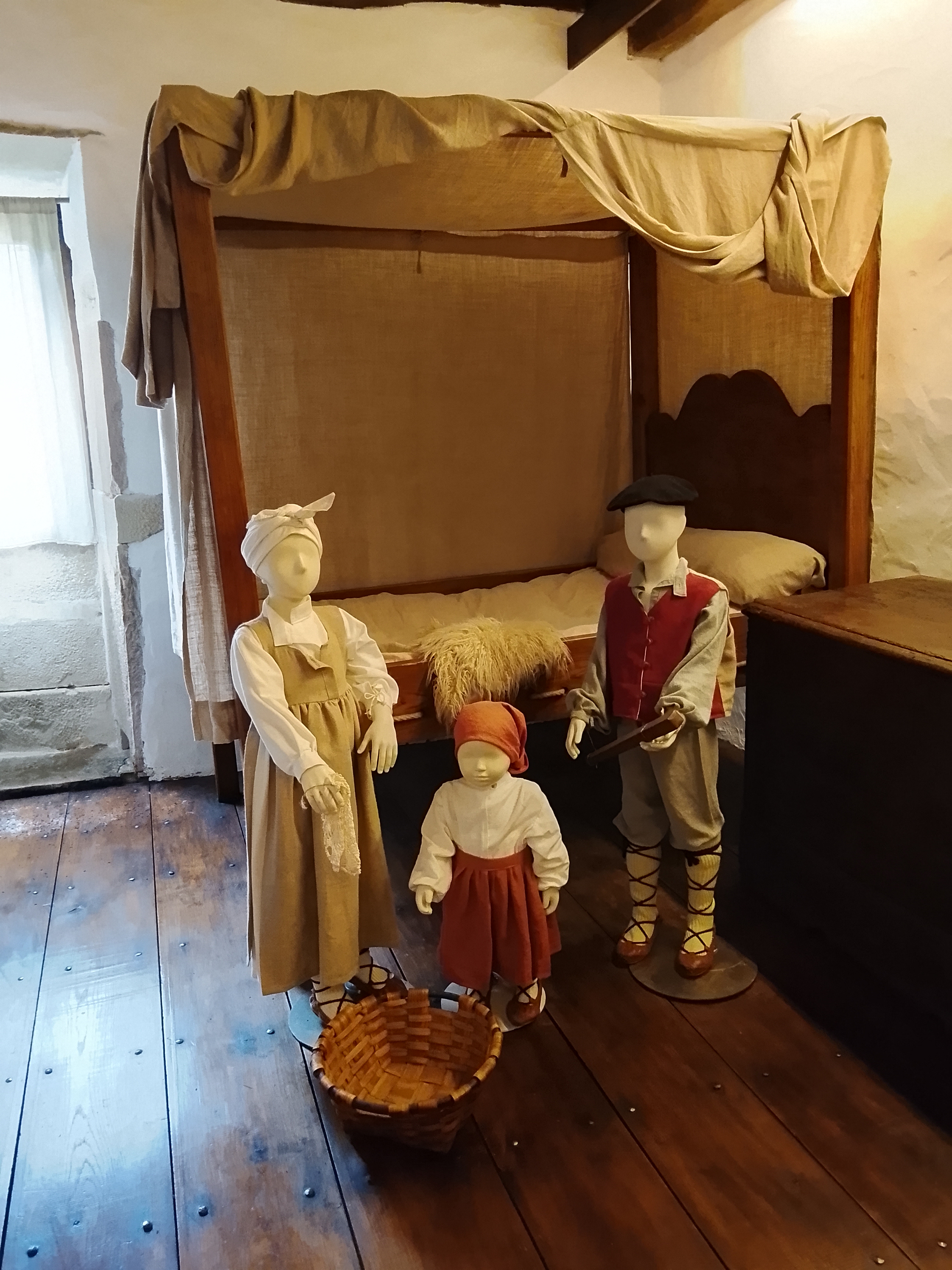
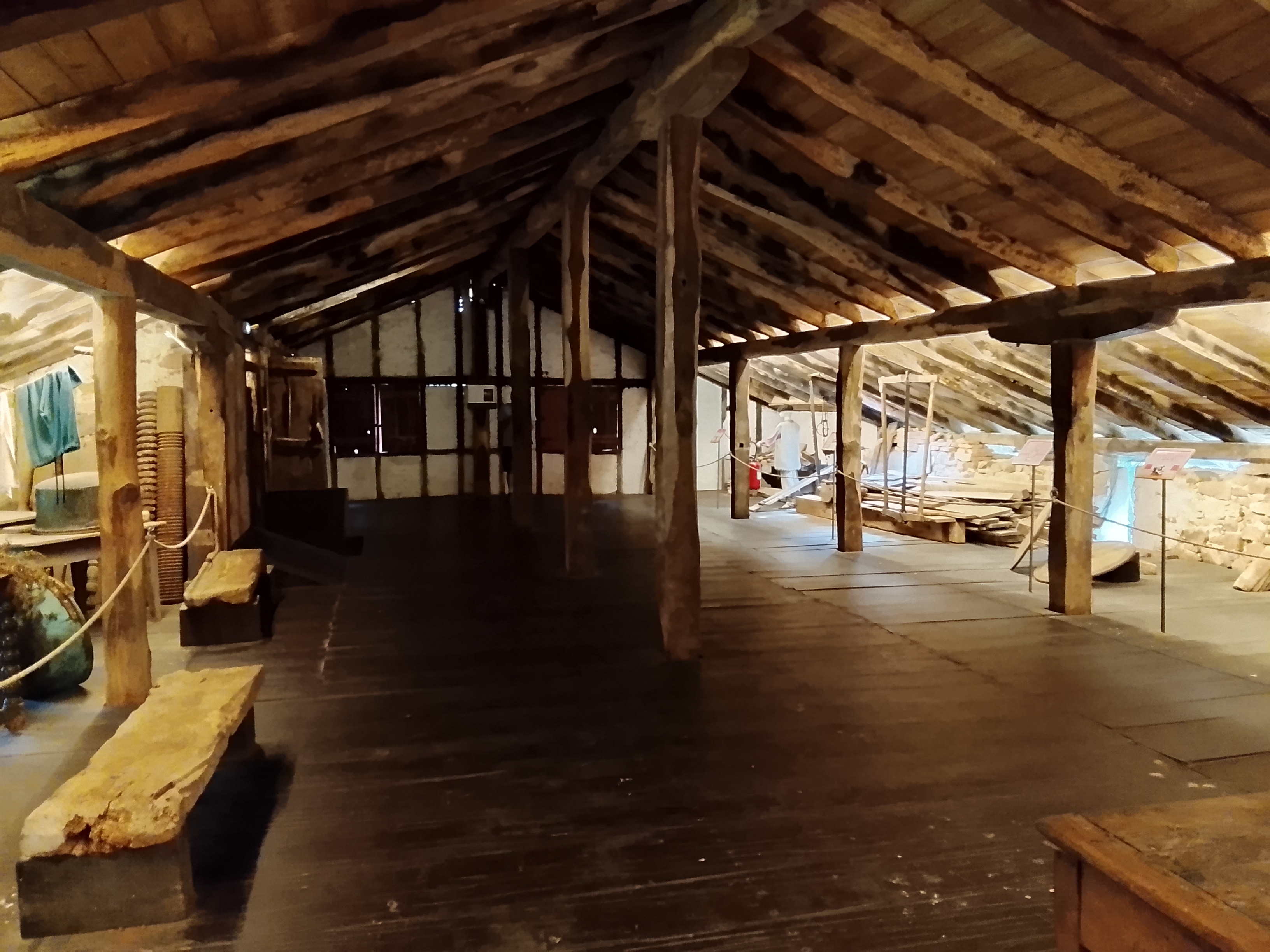
We spent a long time exploring the various displays and reading the descriptions and did, indeed, have the place to ourselves. Outside there was drizzle in the air so after a quick visit to the stables, with more reading, we retraced our steps to the entrance.
As we passed the ticket place the chap called out to ask if we’d enjoyed it. Being me I stopped to chat to him and said I had been interested to compare it to our home of a similar age. We had an interesting exchange which concluded with him showing me the cider he produces. Of course, we ended up buying a bottle and being given explicit instructions on how to open it and drink it!
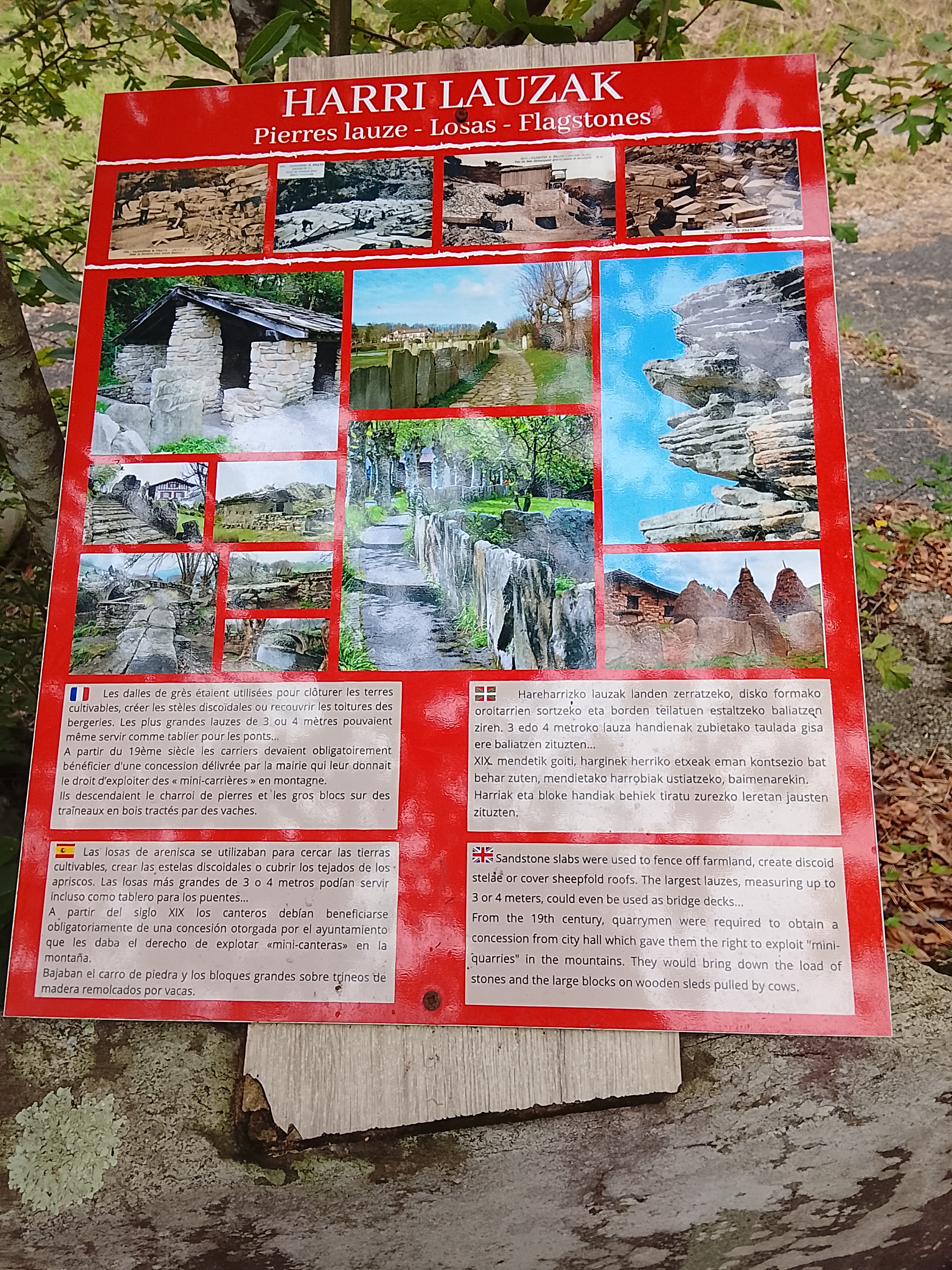
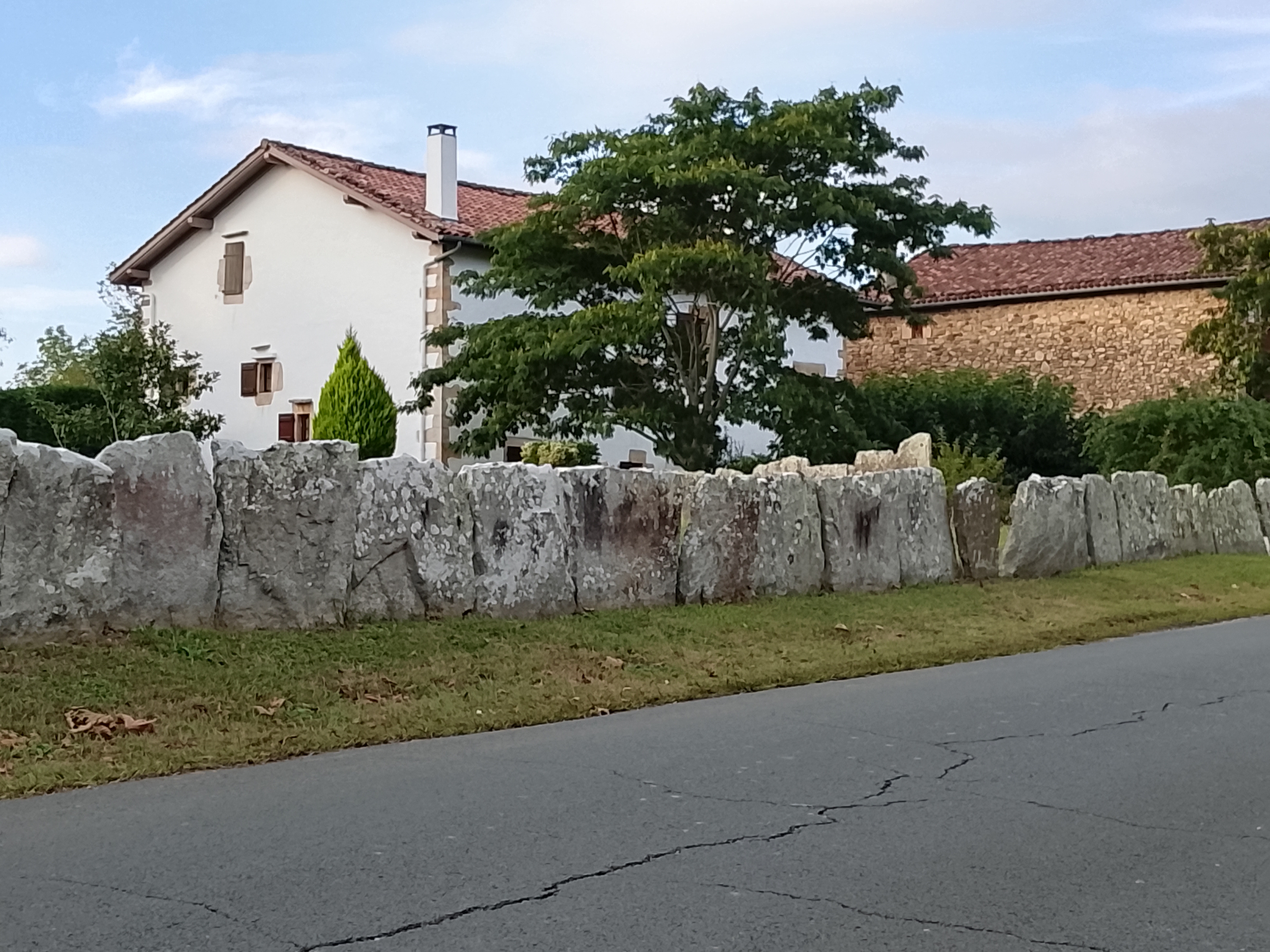
Before we finally dragged ourselves away I took a photo of an explanation of the local use of lauze. In the Lot we’re used to seeing them used as roofing but here in the Basque country they are used, upended, as walls. I found them rather disquieting, reminding me of lines of tombstones.
Driving back we passed yet another field of sheep standing amongst a flock of white birds but were still unable to identify them. One day there will be somewhere to park!
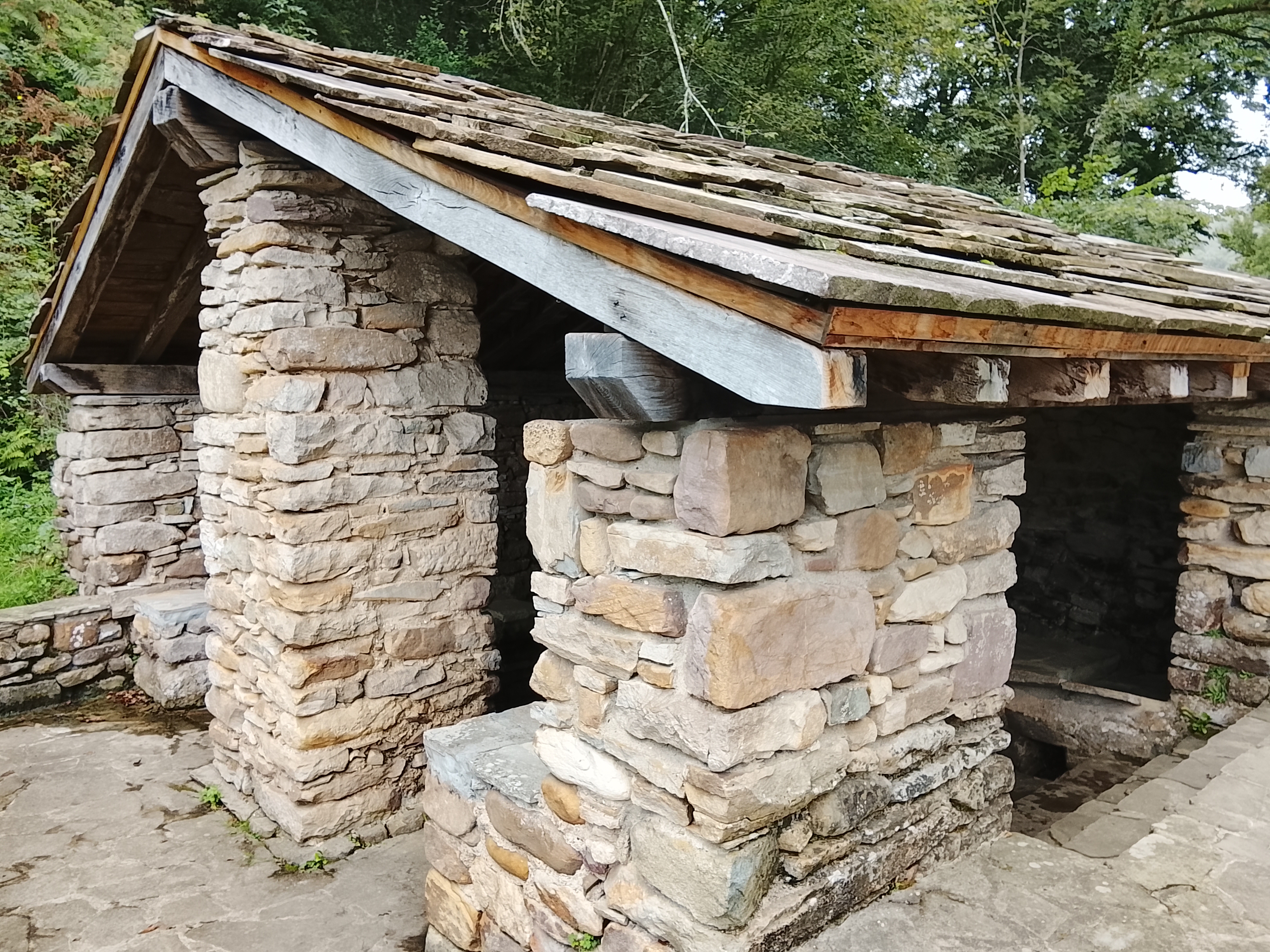
A little further on there was a lavoire which did have parking space nearby. So off I went to record it.
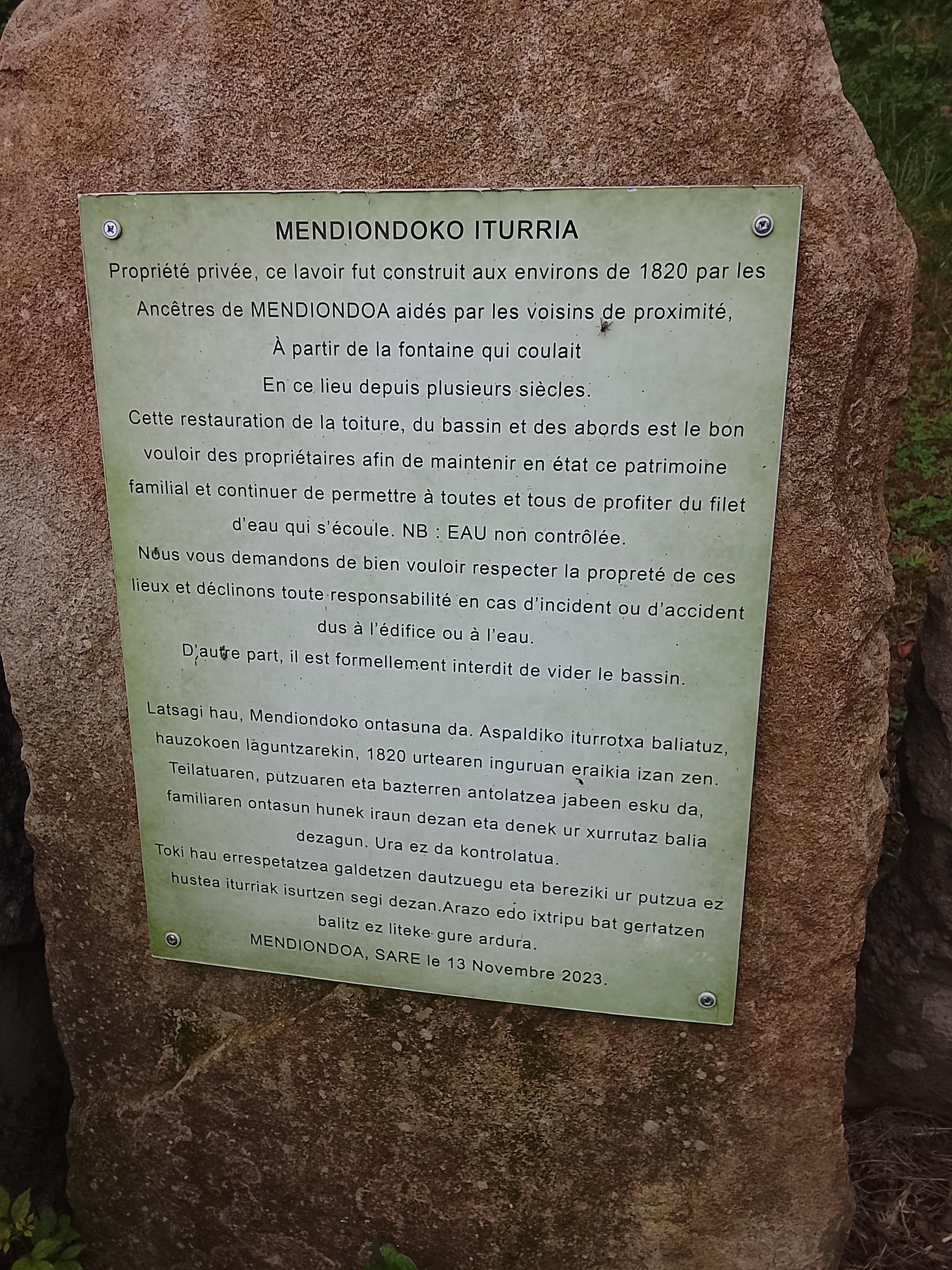
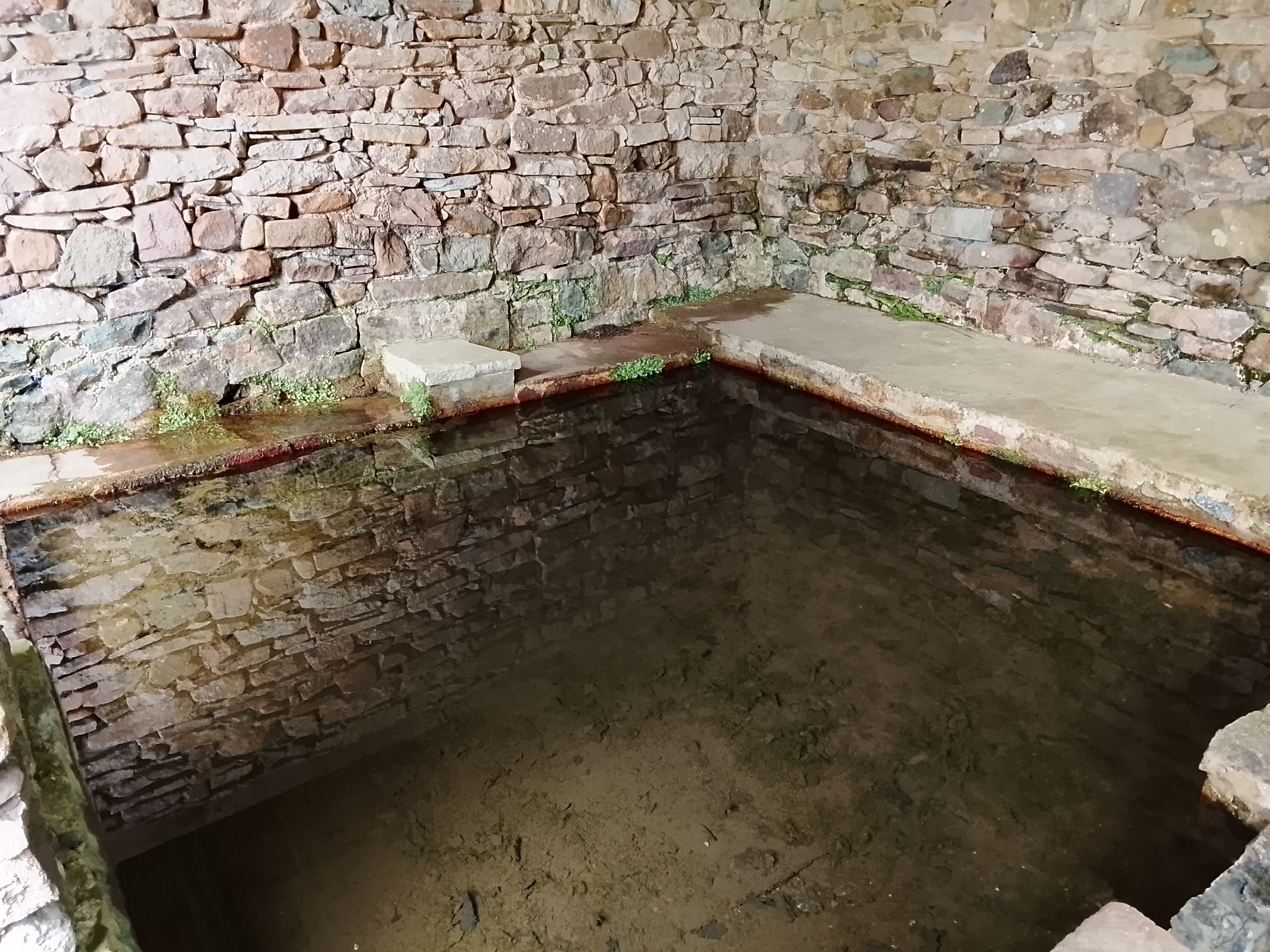
Lavoires were built all over Europe between the 17th and early 20th century, usually by a spring or stream, as somewhere to do your washing. This one dated from around 1820. Looking into the murky water, albeit with a gently moving current, I decided that, nowadays, your washing would come out dirtier than when it went in!
NB If, like me, you noticed the name on the lavoire tablet was the same as our local hero I found out it translates as ‘source’ or spring, a common enough surname in the UK.
 promenadingpeacocks