We didn’t sleep well after our lovely day. It is always the same when we are away, however comfy the bed, we both toss and turn. Annoying but not unexpected. And then as daylight arrived so did the rain.
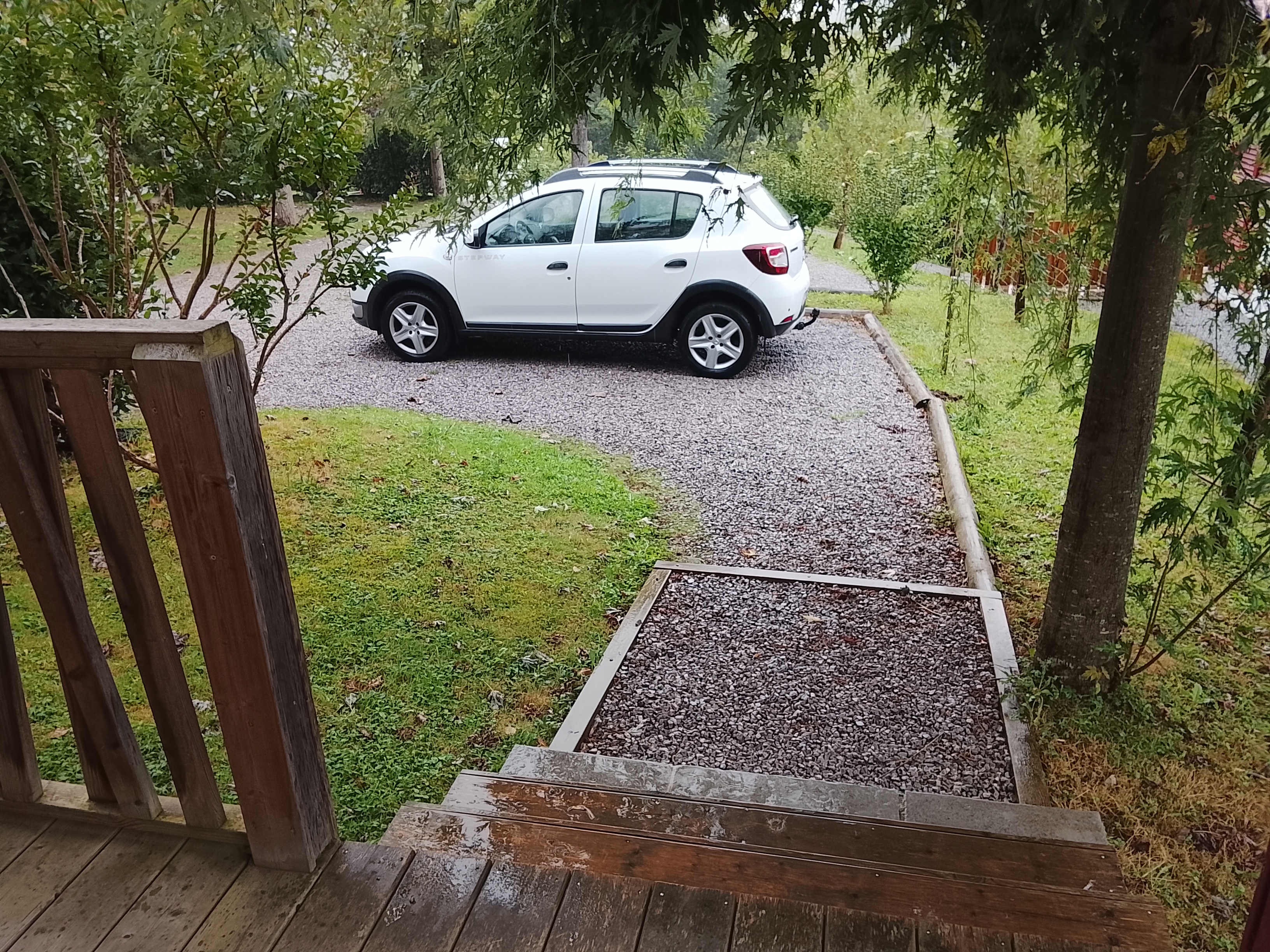
Thankfully the chalet was roomy and comfortable so we decided to spend the day inside. I always pack books and games for such eventualities plus our kindles so lots to keep us occupied. I decided I would read up on the history of the Pays Basque and why it has such a specific identity so important to the people who live here.
Well, that turned out to be easier said than done! The history of the area now known as the pays Basque is one of complicated alliances and a constant fight for identity. From my reading I understand that it was in the 15th century that Labourd (Lapurdi in Basque) and Soule (Zuberoa) came under the French crown. There followed a 16th century marked by the French/Spanish wars and an horrendous witch hunt in Labourd in particular. Along with Basse Navarre, the three Basque areas that fell on the then French side of the border, enjoyed considerable autonomy but was suppressed by the French revolution and followed by the war of the Pyrenees in 1793-95. The Basque language was prohibited and there were mass deportations of Basque citizens to other parts of France, including to ‘our’ department of the Lot.
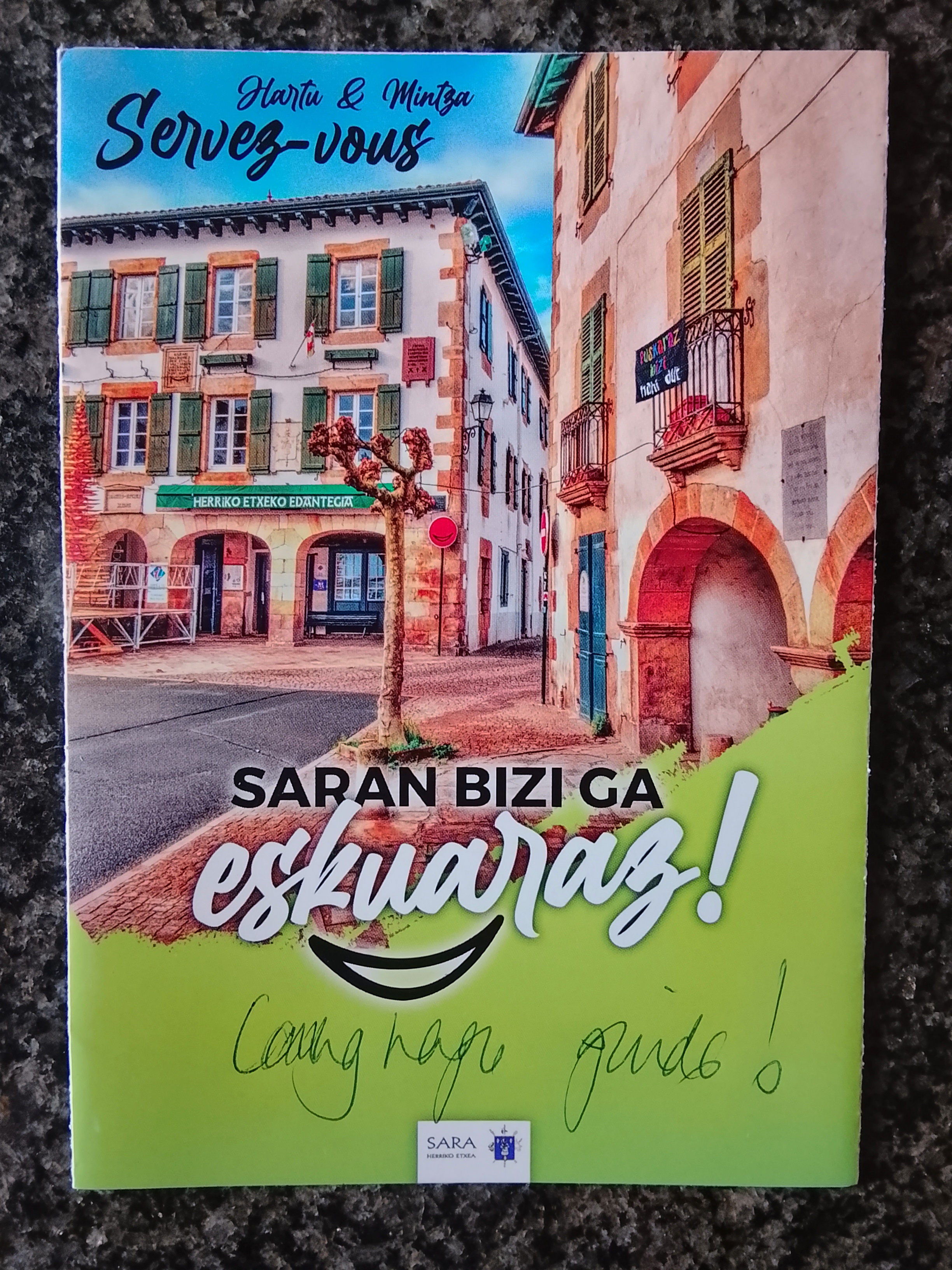
Since 2017 the area including the three Basque regions in France has been known as the Pays Basque or Basque municipal community. The official language of the Pays Basque is French but the Basque language is spoken by many residents as we had discovered. In the area in which we were staying, Labourd/Lapurdi, Basque is spoken by 37% of the population according to a study in 2007. I picked up a leaflet in the supermarket thinking it might be for a site to visit but it was a guide to speaking Basque!
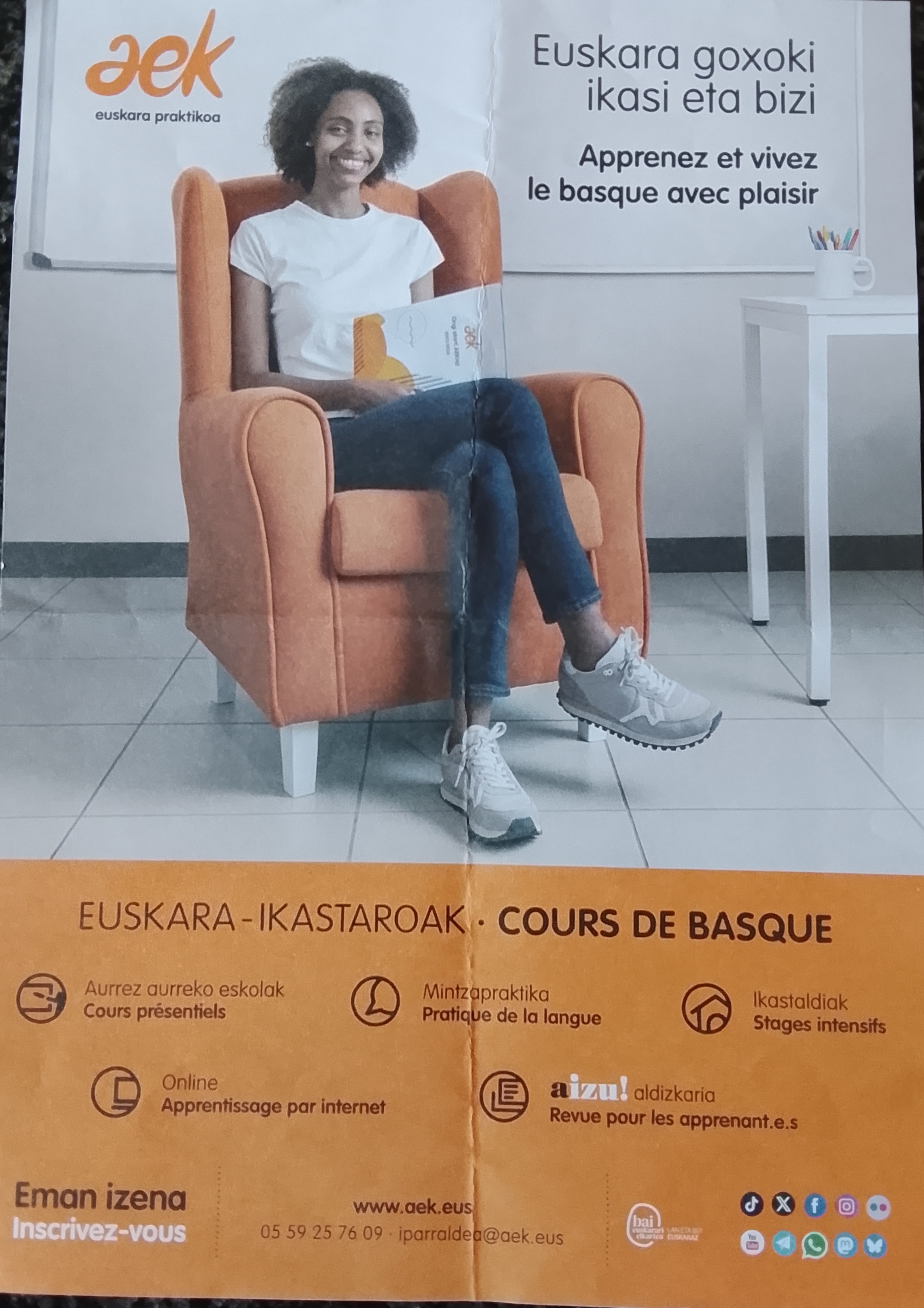
In Sare church I came across a leaflet advertising a course of Basque language lessons! As we travelled around the area we saw the standard two language road signs but on several the French version of town names was painted out. Apparently there is still resentment regarding the departmental name of Pyrennes Atlantique with both the Pays Basque and the neighbouring Bearn wanting more distinction between them.
Another thing that had sparked my curiosity was the origin of a tiny building we had passed the night before on our way home from the hotel restaurant. Resembling a small garage with a pitched roof with a cross on top I couldn’t see a great deal of the interior through the barred window on the door. Looking at the information on the map of the village the girl in the tourist office had giving me I discovered it was an oratoire, a small chapel, one of fourteen pictured on the reverse of the leaflet.
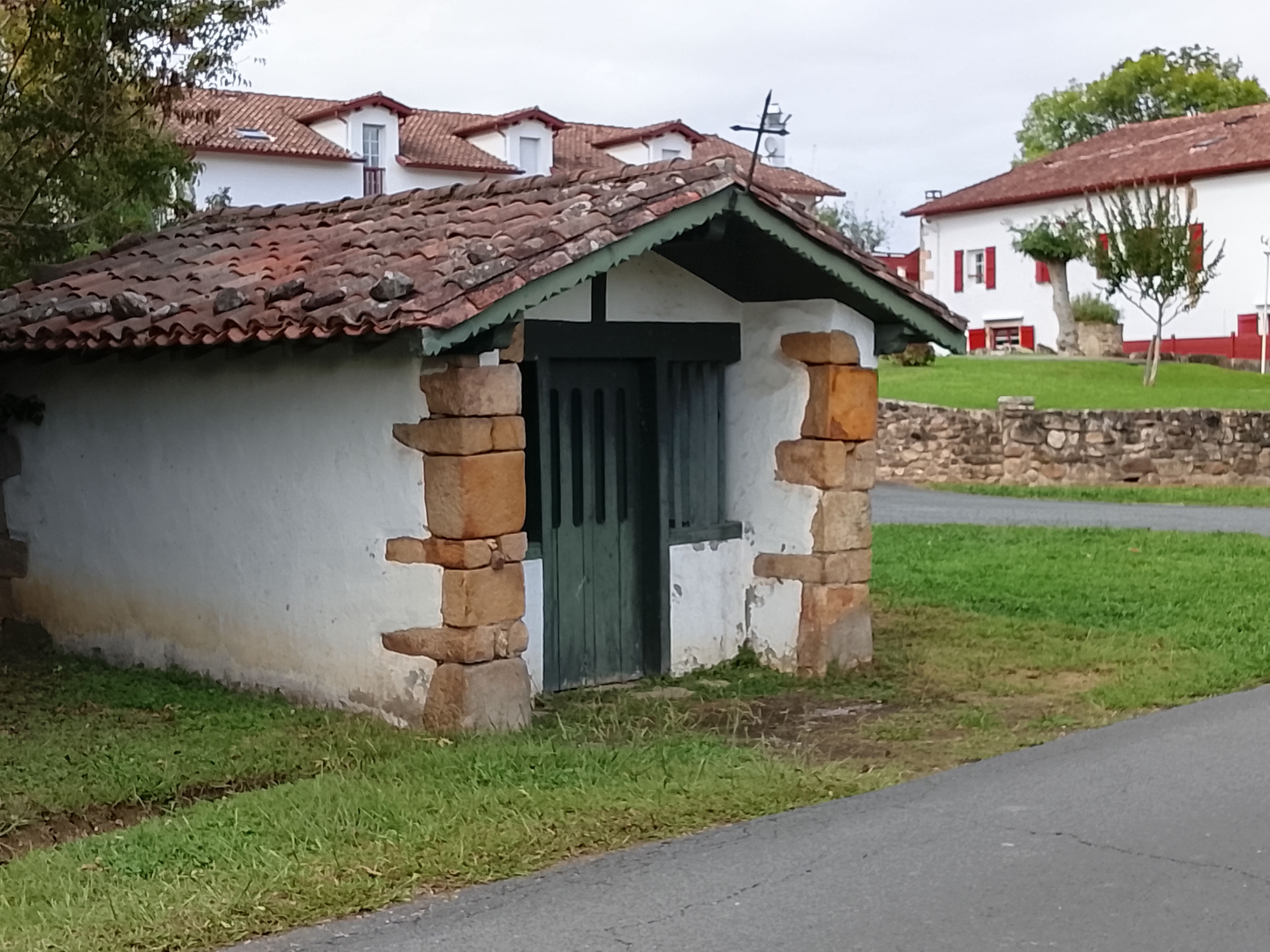
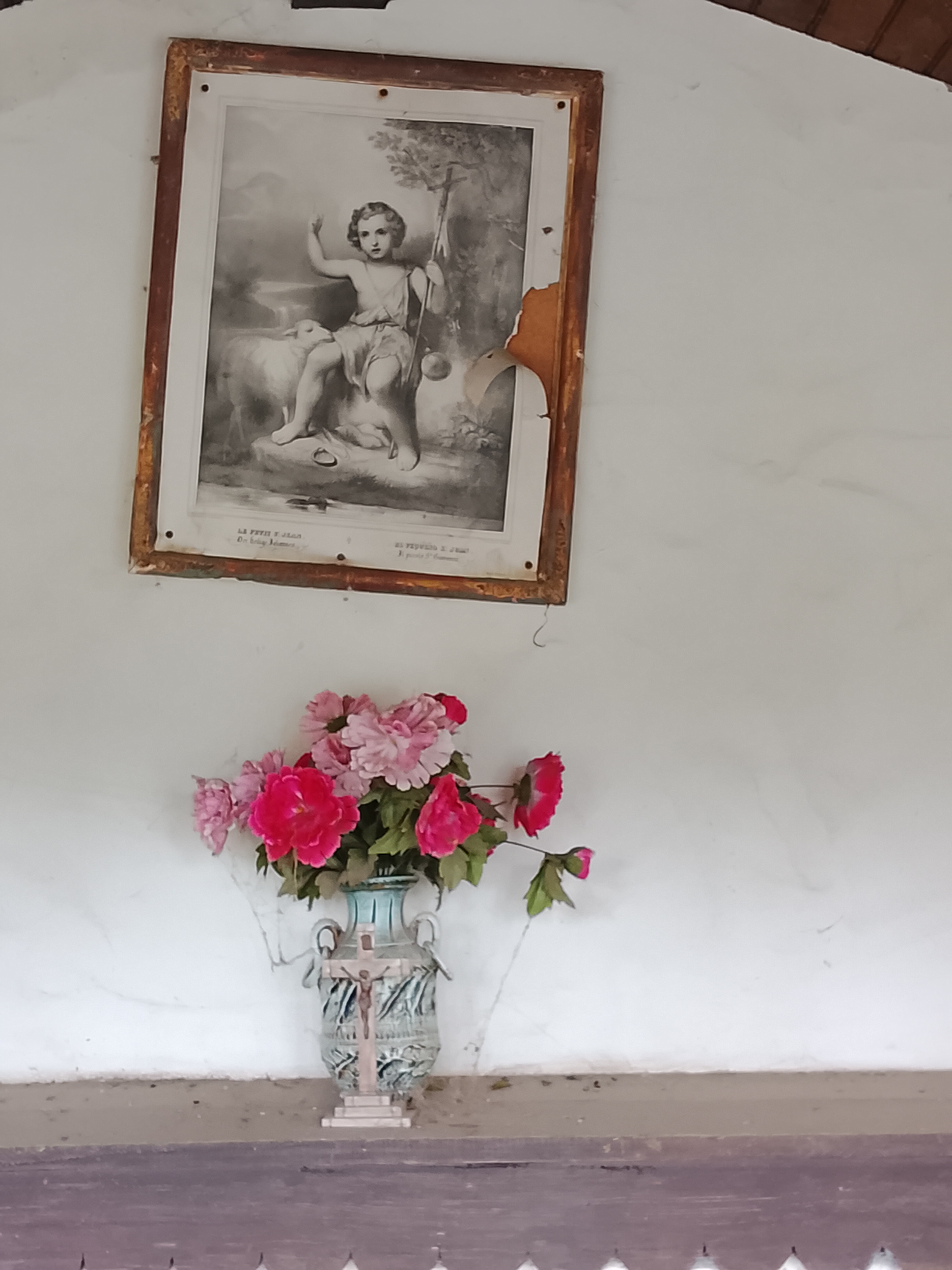
However the only information online in French or English is that they were erected according to the wishes of the sea fishermen of the village in the 17th century. Five are on the medieval road passing Sare but I only found three, one of which was on a nasty bit of road that didn’t permit stopping for photos. Our nearest one was dedicated to Saint Jean Baptiste and wasn’t in a very good state inside.
Driving back from the supermarket one day I stopped to take a photo of the narrowest avenue of plane trees I had ever seen in France and found myself next door to an oratoire dedicated to Notre Dame de Fatima.
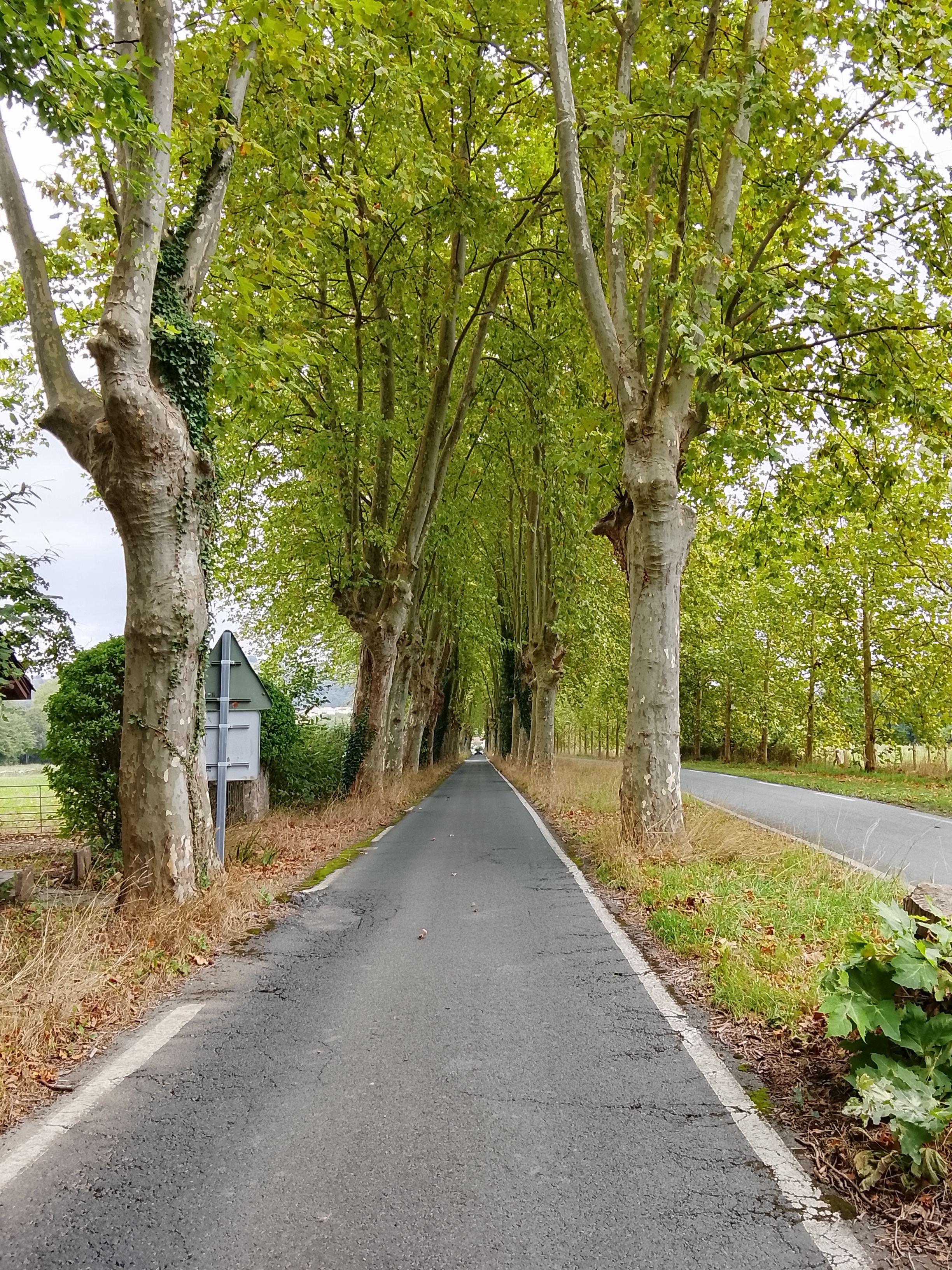
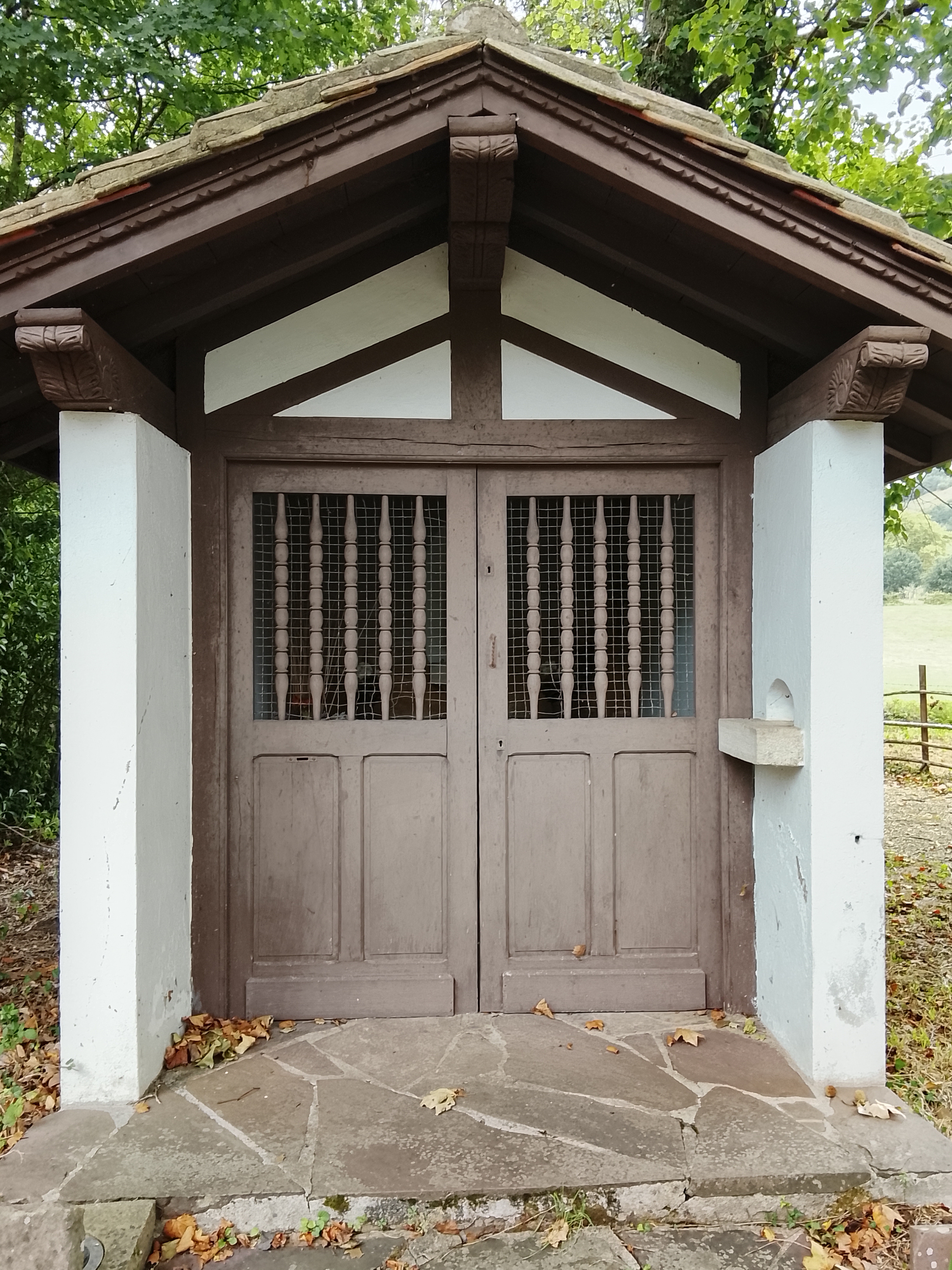
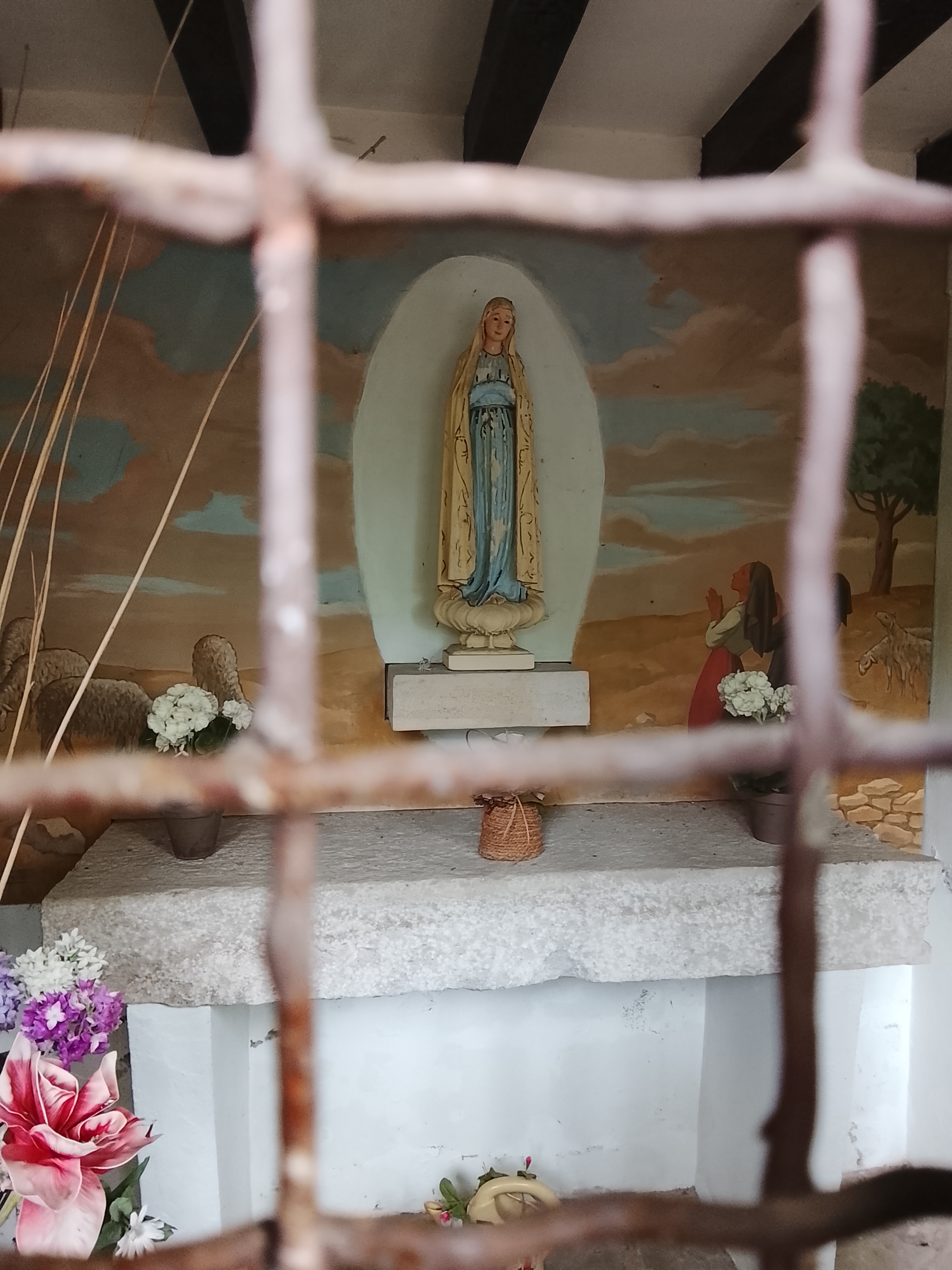
This one was in a more cared for condition. And perhaps she was keeping me safe as I stood in the middle of the oncoming lane of the dual carriageway to take the photo of that avenue!
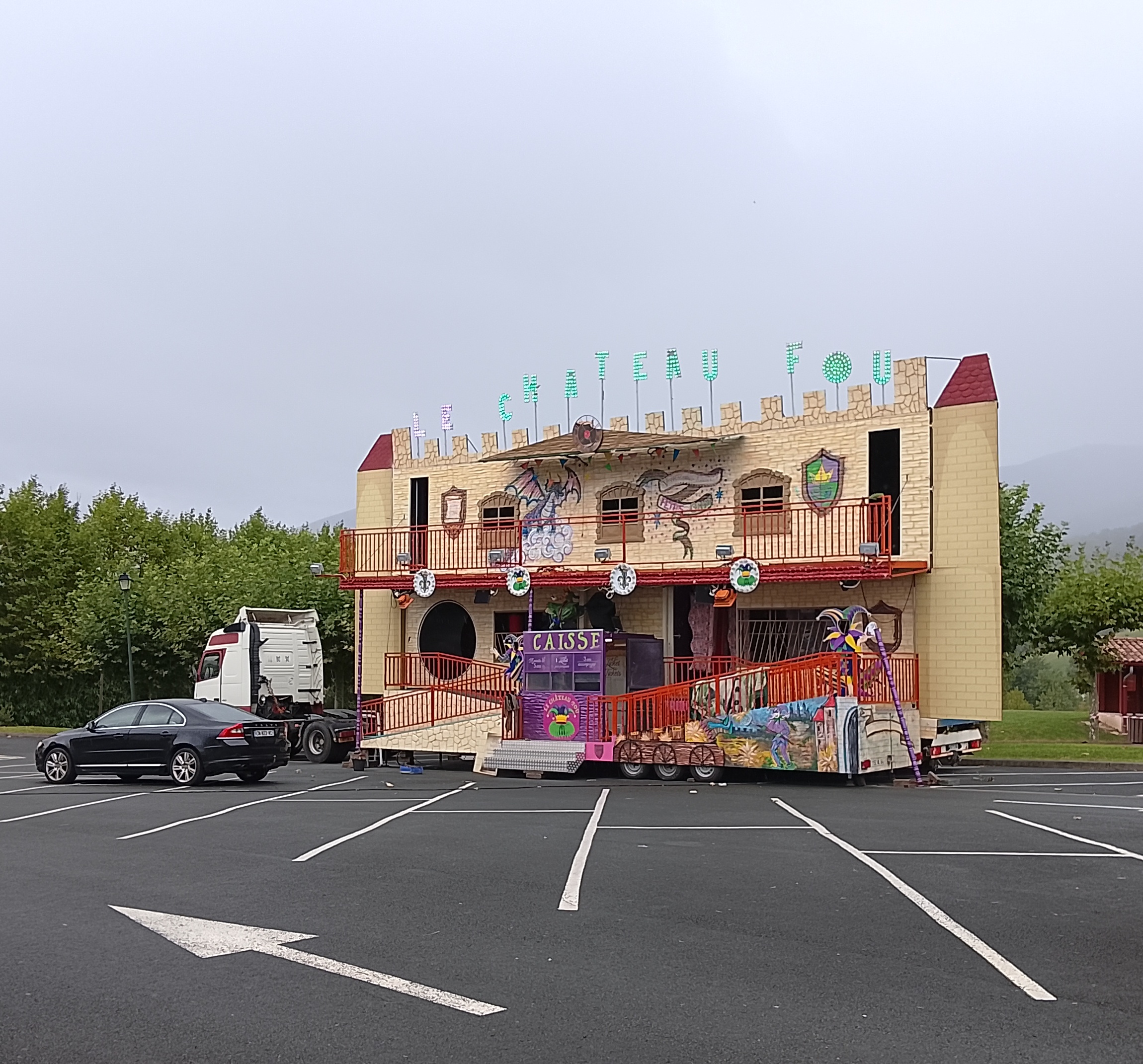
Later on during our quiet day in (sic), we popped up to the village to pick up some bread and found the car park partially closed and a huge funfair vehicle parked on one side. We had seen posters for an upcoming fete in Sare and this was clearly a forerunner. I hoped the weather would improve for their big weekend.
 promenadingpeacocks